About Conocephalus strictus (Scudder, 1875)
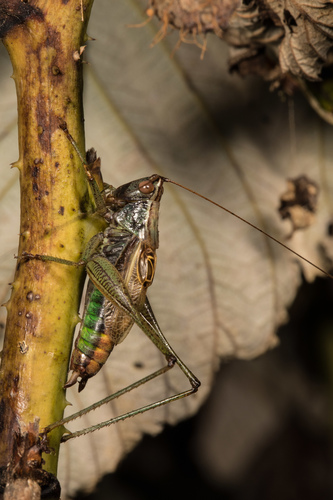
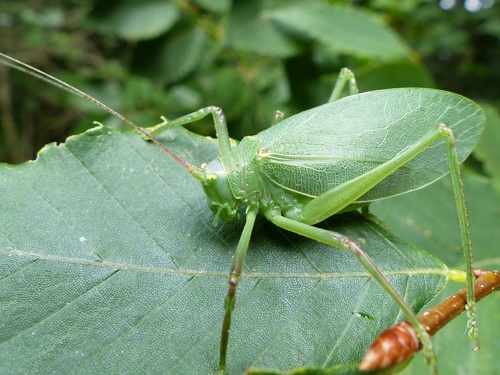
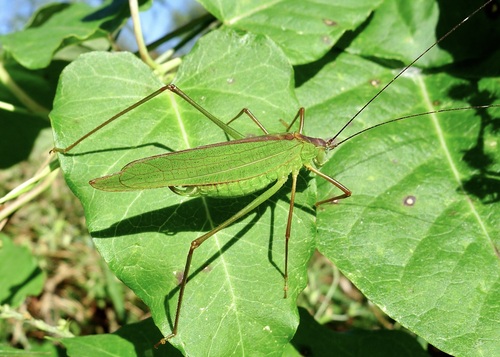
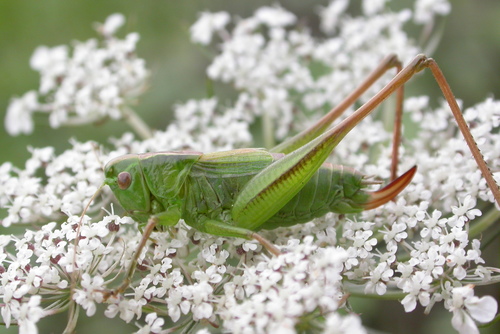
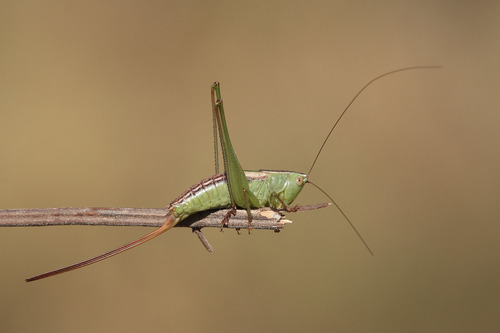
The straight-lanced meadow katydid, Conocephalus strictus (Scudder, 1875), is large and robust for a species in the genus Conocephalus, with an overall body length ranging from 13 to 30 mm. Individuals are colored green and brown, and have short forewings called tegmina. Short-winged forms measure 13–22 mm, while long-winged forms measure 21–30 mm. Males of this species have long cerci that taper beyond the tooth and are flattened in their final third; males are also able to bend their bodies at extreme angles. Females have a straight ovipositor that is longer than their body, and the species was named for this distinctive female ovipositor. This katydid is primarily distributed across the United States, from central Arizona to southern Montana, and from southern New York to southern Georgia. It also occurs in parts of Mexico and Canada. They are commonly found in dry grasslands and old fields with grasses. Their preferred habitat is open short grass areas along roadsides and in pastures, and they usually occur in large, dense clumps. The song of the straight-lanced meadow katydid is a faint purr with a pulsating quality, produced at a frequency of 10–20 kHz. Adults first emerge in late summer, though the species can be found year-round.