About Conistra vaccinii (Linnaeus, 1761)
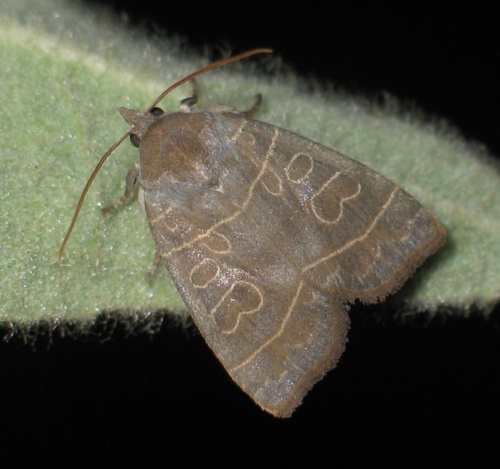
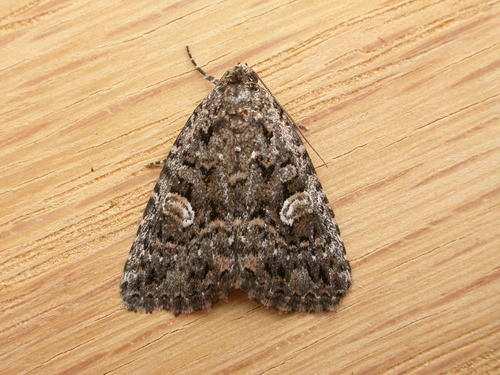
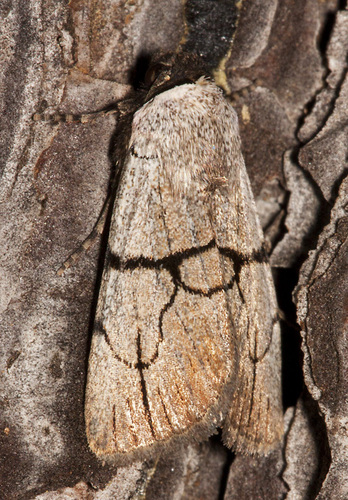
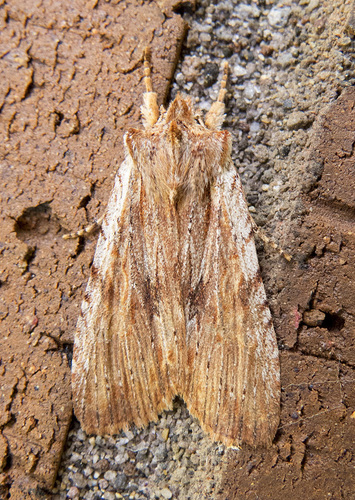
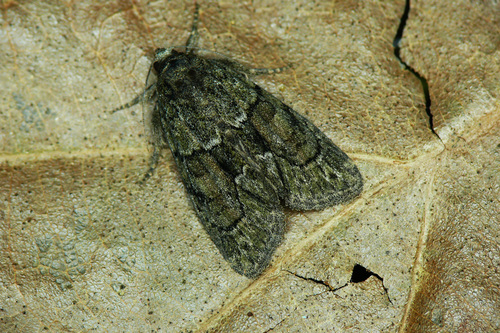
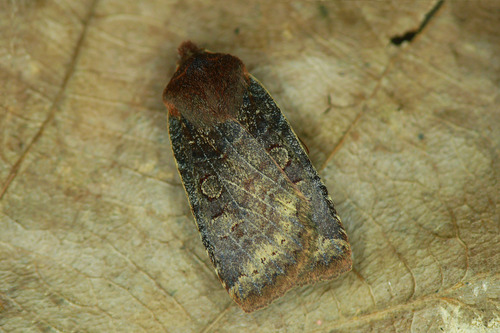
Conistra vaccinii (Linnaeus, 1761) has a wingspan of 28–36 mm. Its wing pattern and colouring are extremely variable: body colour ranges from dove grey to dark grey brown, with markings in shades from light brown, light red, and reddish-brown to black-brown. This high variation has led to the recognition of distinct formae (forms). The apex of the forewing is slightly concave. The head and thorax usually match the colour of the wings, while the abdomen is partially or completely reddish brown. The inner and outer serrated crossbars are usually darker than the base wing colour and more or less clearly defined. Specimens with white-edged, much darker crossbars are common. The reniform and orbicular stains may be clearly visible, but can also be almost completely absent. There is always a black dot in the lower section of the reniform stain. The medium shade, which varies in prominence, is darker than the base wing colour and has a distinct median bulge. The wavy submarginal line often appears as a series of black dots. This species occurs on several Mediterranean islands including the Balearics, Corsica, and Sardinia, in Northern Fennoscandia, and across most of Europe except southern Spain. Its range extends south from western Morocco to Mediterranean North Africa, and continues east through Anatolia to Turkestan, as well as Western and Central Siberia. In the German central uplands, it is found up to an elevation of around 1200 meters. Larvae of Conistra vaccinii feed on a variety of deciduous trees and shrubs; in later larval stages they also feed on herbaceous plants. The species occupies a very wide range of habitats, including open forests, scrubland, downs, gardens, parkland, and shrub-rich open country. Habitats can be dry or wet, cool or warm.