About Conistra rubiginea (Denis & Schiffermüller), 1775
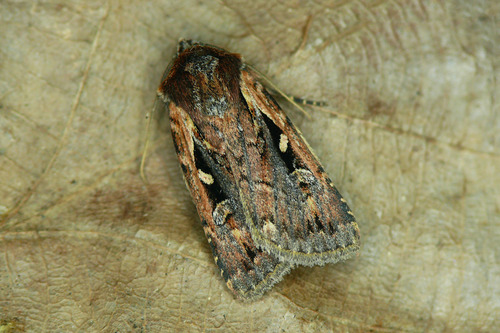
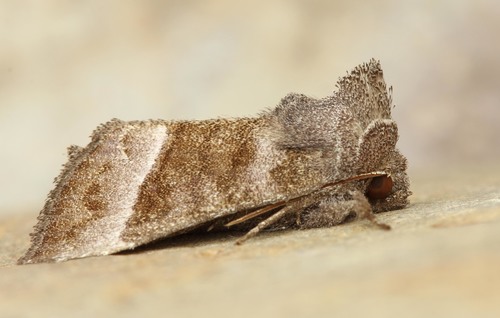
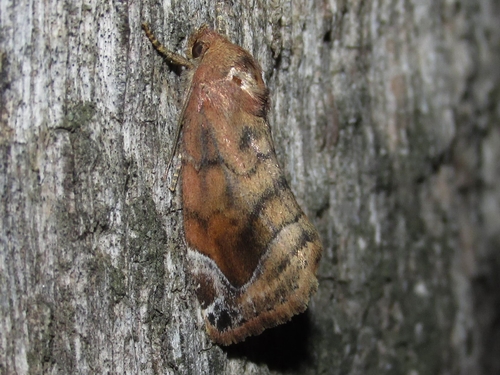
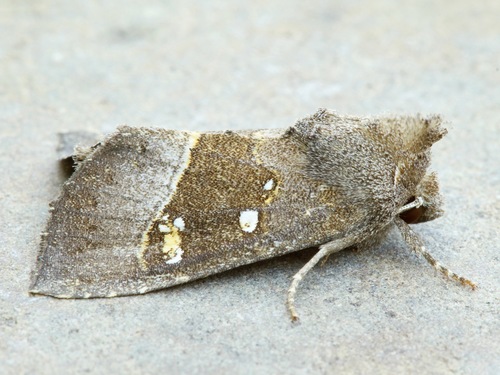
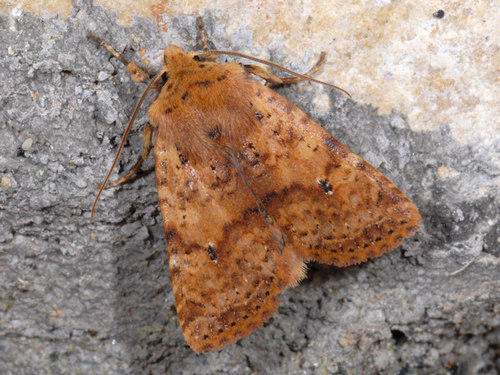
Conistra rubiginea, originally described by Denis & Schiffermüller in 1775, has several previously published synonyms: pulverea Hbn., neurodes Hbn., and rubigo Rmb. For typical specimens: the forewings are fulvous yellow; fulvous brown lines, marked by black spots on the veins, are present, with the basal, inner, and outer lines all double. The median shade is often broad and diffuse, and only rarely swells enough to darken the central area along the inner margin. The orbicular and reniform markings match the pale ground color of the forewing and are undefined: the orbicular marking has a black center, the lower lobe of the reniform marking is black, and the lateral margin on each side of the reniform is pale yellow. The terminal area of the forewing is narrowly brown. The hindwing is blackish fuscous, and the fringe is rufous. Several named aberration forms are recognized. Specimens suffused with fulvous brown form the aberration tigerina Esp. The aberration unicolor Tutt has a brick-red body and forewings, with very few black markings that are restricted to the base of the submedian fold, the center of the orbicular stigma, submarginal and marginal points, and the lower part of the reniform; its hindwing is reddish ochreous with dark brown suffusion. The aberration modesta Hmps. has deep fulvous thorax and forewings, with only the basal area and the lines of the stigmata remaining yellow. The aberration completa Hmps. has uniformly deep fulvous thorax and forewings. Mature larvae are dark brown, with a black blotch on the dorsum of each segment. Their lines are obscurely paler, and a dark line runs above the prolegs. Larvae are anomalously protected by brownish-yellow hairs. They have been reported to occur, along with the pupal stage, inside ants' nests. The wingspan of adults is 30–35 mm. Recorded food plants for larvae include various deciduous trees such as Quercus, Salix, and Ulmus, as well as herbaceous plants including Plantago.