About Conistra erythrocephala (Denis & Schiffermüller), 1775
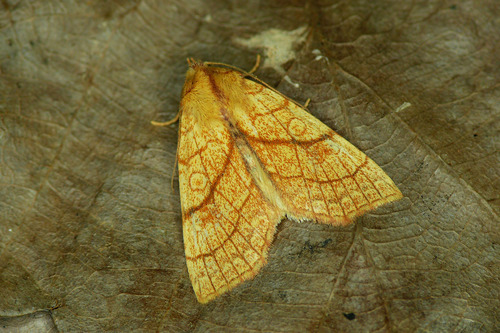
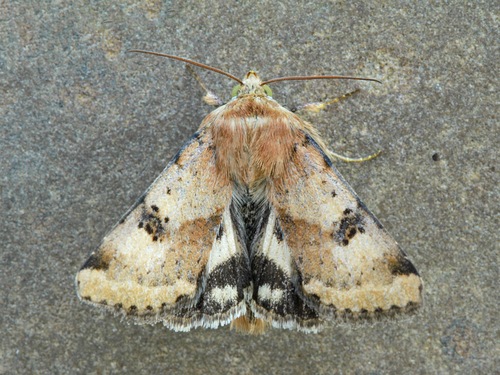
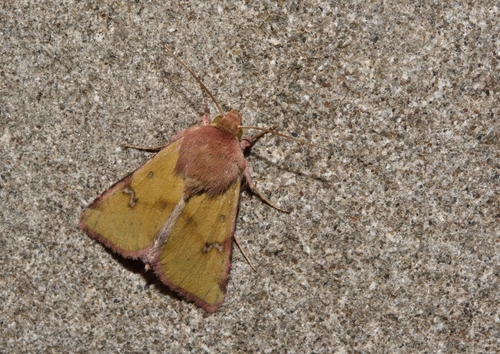
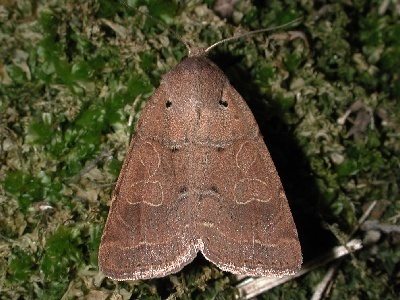
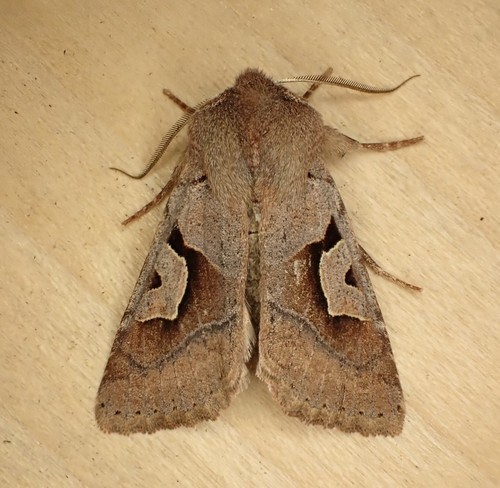
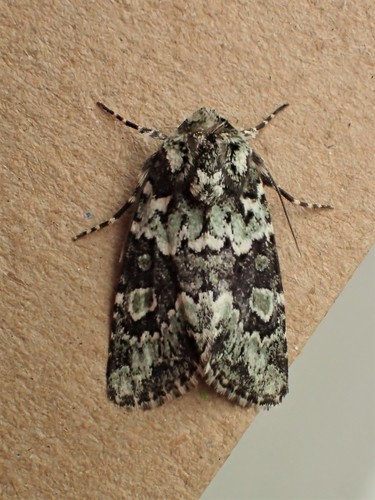
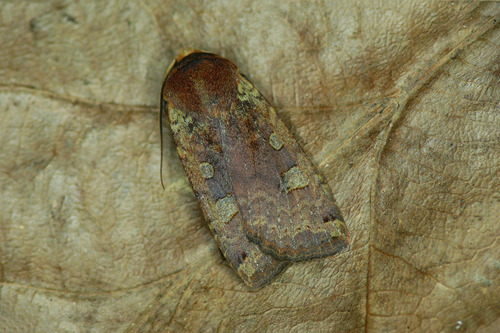
Conistra erythrocephala, first described by Denis & Schiffermüller in 1775, has the following technical description and variation. For the typical form: Forewings are dull red-brown, with more or less grey suffusion; the lines are obscure and indistinctly double. The submarginal line has a darker blotch before it on the costa. The upper stigmata are usually filled with grey, have paler brown-edged annuli, and are often obscure and unicolorous. The reniform stigma generally has black spots around its lower end. Hindwings are greyish fuscous, and the fringe is pale ochreous. Several named aberrations exist. In ab. glabra Hbn., the ground colour is darker and more purplish-brown, with pale grey colouring on the costal streak, the two stigmata, and a submarginal fascia; the lines are also usually paler and more visible. Ab. impunctata Spul. has a reniform stigma that lacks black points; other markings are often more obscure in this form, and the ground colour is striated with dark. In pallida Tutt, the dark ground colour is overlaid and hidden by pale grey suffusion. The larva is grey-brown or yellowish-brown. Its dorsal and subdorsal lines are fine and pale; the subdorsal lines are sometimes absent. The dorsum is dotted with white, and the spiracles are black. The wingspan of this moth is around 38 mm (1.5 in). Recorded food plants for the larvae: larvae feed on young leaves of oak (Quercus species) and elm (Ulmus species), before descending to feed on herbaceous plants.