About Conisania luteago (Denis & Schiffermüller), 1775
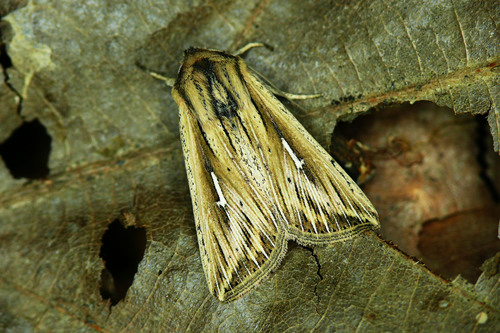
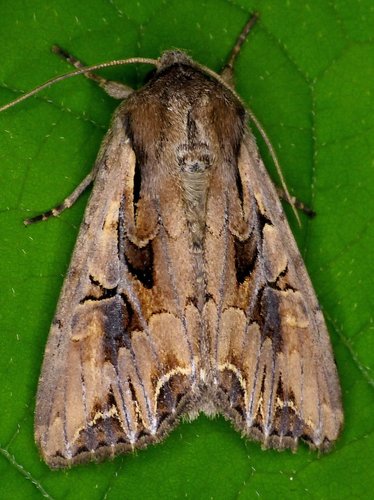
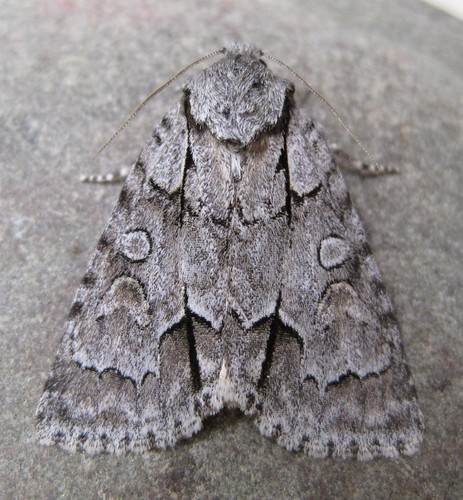
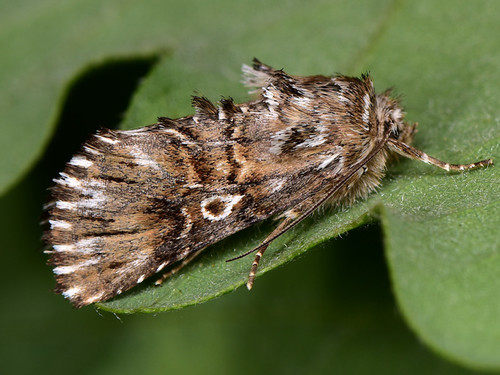
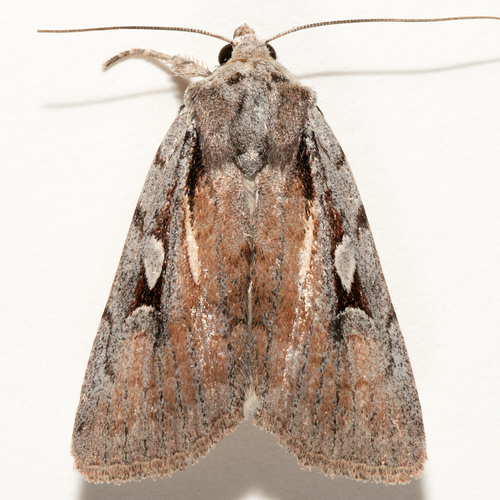
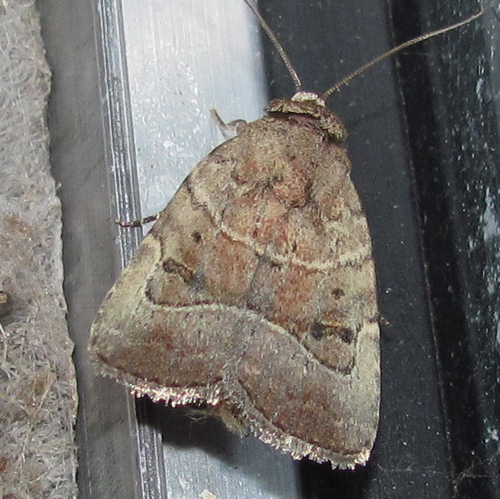
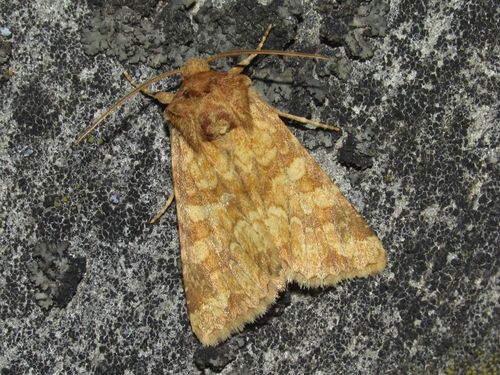
This moth species has a wingspan of 29–40 mm. According to Warren (1914), the forewing of the typical form is yellowish ochreous, with faintly darker or brownish shading in the median and marginal areas. Upper stigmata are generally pale, and dark lines are fairly distinct. The hindwing is fuscous yellowish, becoming more fuscous in darker specimens; the veins and a postmedian line are darker. The aberration brunneago Esp. is a yellow form with well-developed brown lines and shading, and the costa of the forewing is mottled with brownish. The aberration argillacea Hbn. is much more variegated, with dark grey-brown markings and a greyer ochreous ground colour, and a dark brown hindwing. Of this form, barrettii Dbld. — now classified as the separate species Conisania andalusica and found only on the coast of Ireland — is an extreme form. The larva is pale ochreous, sometimes pinkish, with a brown dorsal vessel visible through the cuticle and 4 fine tubercles on each segment. Spiracles are pale with black rings; the head is pink with black markings. Larvae feed in summer within the stems and roots of various Silene species. Conisania luteago is widely distributed across Europe, where it occurs in Ireland, Guernsey, France, Spain, Italy, Corsica, Germany, Austria and Russia. It is also found in Algeria, Asia Minor, Armenia, Persia, Turkestan, and Siberia. Conisania luteago is very similar to Conisania andalusica, and can only be distinguished from it by genitalic characteristics.