About Conisania andalusica Staudinger, 1859
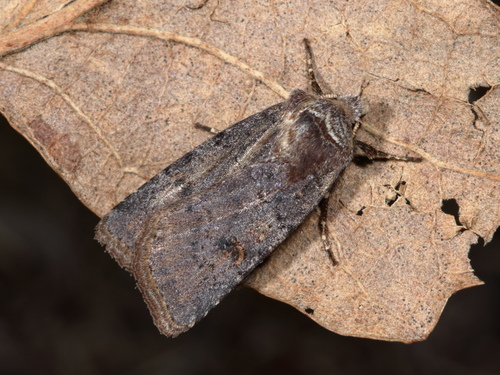
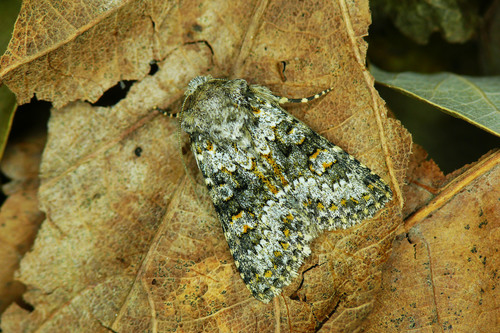
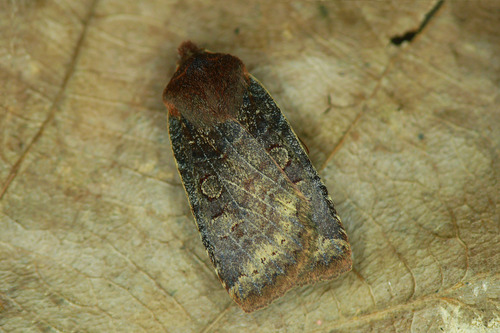
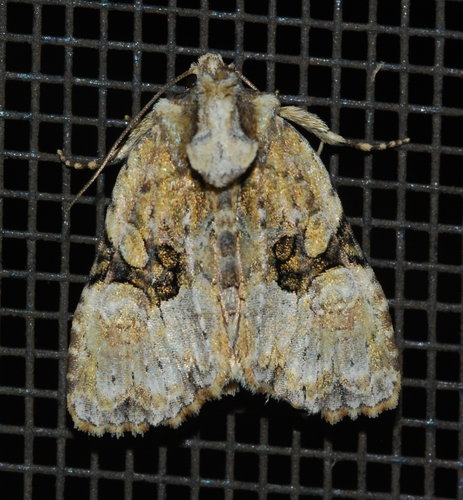
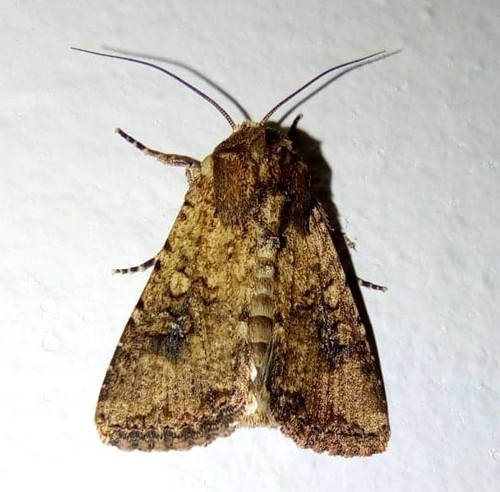
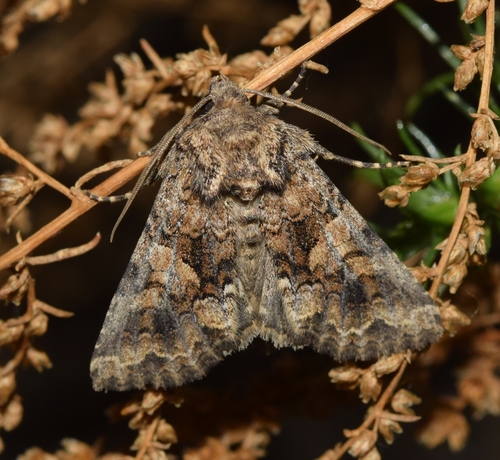
Conisania andalusica, commonly known as Barrett's marbled coronet, is a moth species belonging to the family Noctuidae. It was first described by Otto Staudinger in 1859, from a specimen collected in the Sierra Nevada of Spain. This species is found in Ireland, Great Britain, Germany, the Iberian Peninsula, and in North Africa outside of Europe. The wingspan of males ranges from 35 to 39 mm, while the wingspan of females is 39 mm. The forewing is dark grey mixed with ochreous; the two upper stigmata and a patch beneath these stigmata, located beyond the claviform stigma, are the palest areas of the forewing. The hindwing is blackish, and male antennae are reported to bear strongly developed teeth. Conisania andalusica is very similar in appearance to Conisania luteago, and can only be distinguished from this related species through examination of genitalic characters. Adult moths are active on the wing from June to August. The larvae of this species feed on flowering plants belonging to the genus Silene.