About Conirostrum binghami (Chapman, 1919)
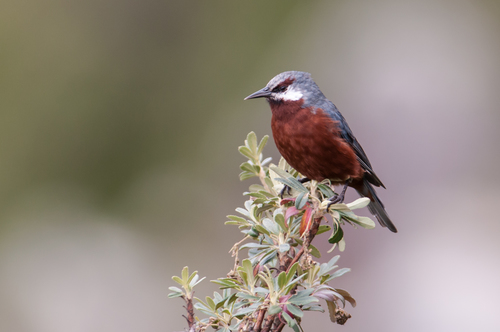
The giant conebill, scientifically named Conirostrum binghami, is a small passerine bird belonging to the tanager family. It is closely related to other members of the Conirostrum conebill genus, but differs from them in its larger size and nuthatch-like foraging behavior. This species measures 15 centimetres (5.9 in) in length and weighs 22–27 grams (0.78–0.95 oz). Its upperparts are grey, its underparts are deep chestnut, and it has a distinct white patch on its cheeks. It occurs in the Andes, ranging from Colombia to Ecuador, and from Peru to Bolivia. It inhabits Polylepis trees, which are part of the Rosaceae plant family. Giant conebills live alone, or in groups of no more than 5 individuals. They peel bark from Polylepis trees to search for insects, and also feed on aphids and sugary secretions produced by Gynoxys plants. This is a seasonal breeding species, which nests at the start of the rainy season. In the studied population in Bolivia, nesting occurs between September and December. The nest is an open cup structure built on the branches of Polylepis trees, with an average clutch size of 1.8 eggs. Both parent birds take part in incubating the eggs, feeding the hatchlings, and removing fecal sacs from the nest. The ongoing decline of this species is linked to the destruction and fragmentation of Polylepis woodland.