About Condea emoryi (Torr.) Harley & J.F.B.Pastore
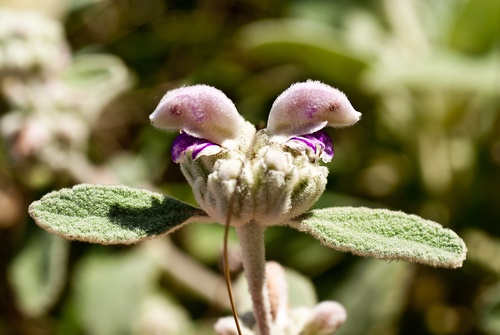
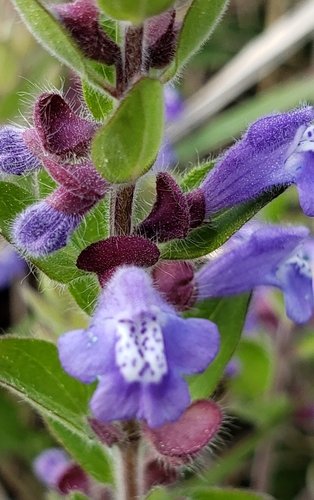
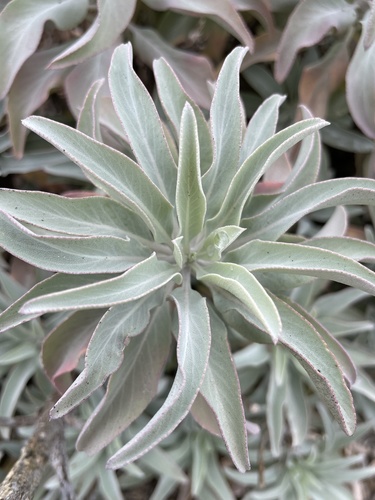
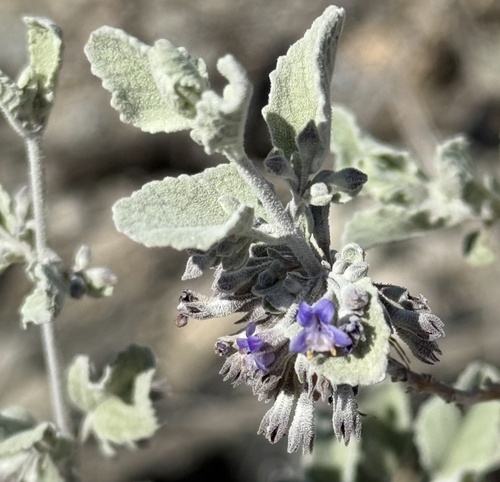
Condea emoryi, commonly known as desert lavender, is a medium to tall cold-tender perennial shrub native to the southwestern United States (Arizona, Nevada, California) and northwestern Mexico (Sonora and Baja California). This multi-stemmed shrub reaches 8–12 ft tall when grown in optimum locations. Its violet-blue flowers, which grow up to 1 inch long in leaf axils, appear profusely along main stems and side branches. The plant is aromatic and attracts honeybees and other species. Its leaves are oval, 2–3 inches long, have serrated margins, are covered in hairs, and are whitish gray-green when growing in desert environments. Desert lavender grows in dry washes and on rocky slopes up to 3280 ft (1000 m) in elevation. It is either evergreen or cold deciduous, depending on its growing location. This species occurs mostly in areas that have a water source, and it is commonly found in dry washes mixed with other species in southwestern US deserts. In the creosote bush scrub Yuma Desert (part of the western Sonoran Desert) of southwest Arizona, common associated species found in the same washes include palo verde, Bebbia, Encelia farinosa, desert ironwood (Olneya tesota), Lycium andersonii (wolfberry or Anderson thornbush), Psorothamnus spinosus (a type of smoke tree), and Acacia greggii, with presence dependent on elevation. In Arizona, it can be found from central to southwestern Arizona in the Sonoran Desert, and in regions of the Mojave Desert in northwest Arizona. In southern California and Nevada, desert lavender grows in the southern regions of the Mojave Desert and the Colorado Desert of southeast California.