About Compsus canescens (Boheman, 1840)
Scientific name: Compsus canescens (Boheman, 1840)
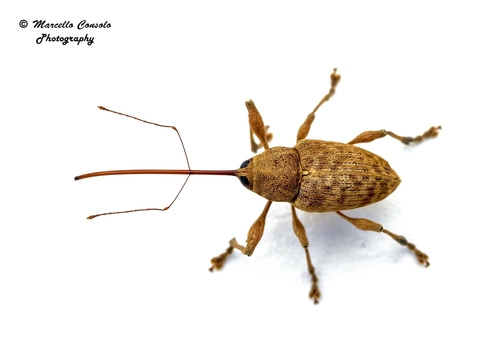
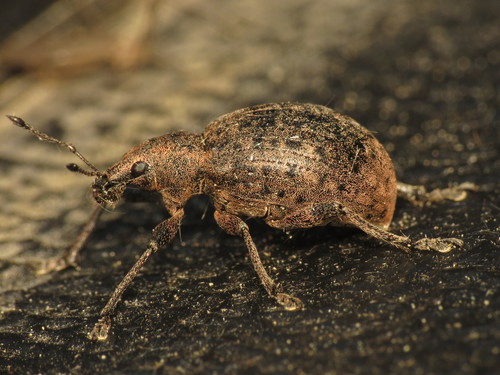
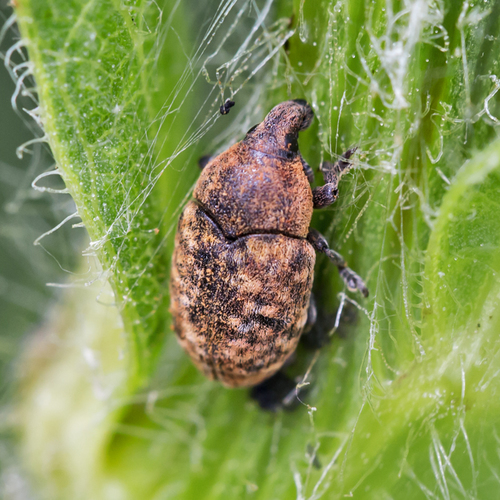
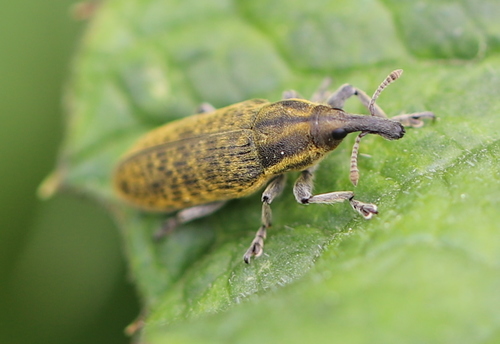
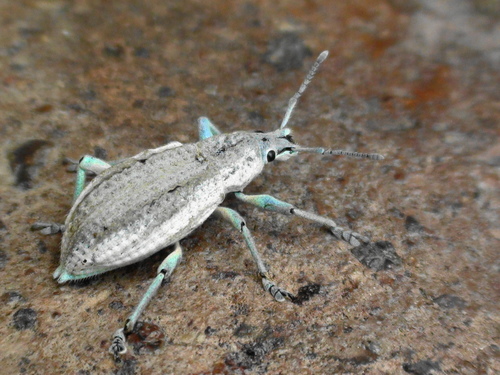
Boheman’s original species diagnosis, written in Latin, is as follows: Oblongus, niger, breviter setulosus, supra squamulis canis lateribus et subtus argenteis tectus, thorace profunde sat crebre rugoso, dorso lato profunde lateribus obsoletius longitudinaliter impresso, antice tenue canaliculato; elytris dorso depressis, sat profunde punctato- striatis, interstitiis alternis elevatis, carinatis, apice breviter mucronatis. Translating from this diagnosis, Compsus canescens can be identified by the following morphological features: body covered with short small setae; dorsal scales are grey or silver; the pronotum is depressed along its midline, has coarse wrinkled texture, and bears faint lateral longitudinal grooves; the elytra are flattened on their dorsal surface, have moderately deeply impressed punctured striae, alternate interstriae are elevated and keeled, and the elytron apices end in a short small point.
Distribution: Oxyderces viridipes is endemic to Colombia. Its type locality is 'Nova Granata', and there are numerous records of this species on iNaturalist from Bogotá and the surrounding municipalities.