About Comocrus behri Angas, 1847
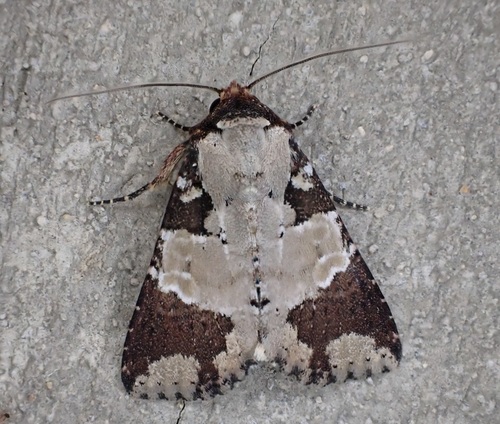
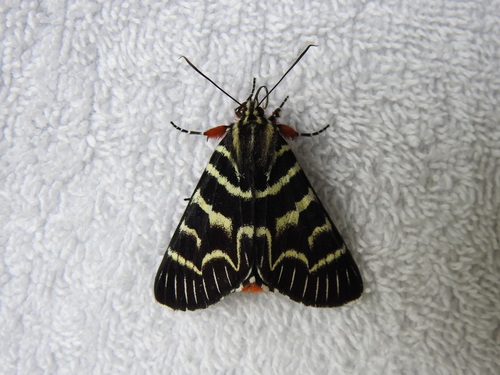
Comocrus is a monotypic moth genus in the family Noctuidae, which was erected by Karl Jordan in 1896. This genus contains only one species: Comocrus behri, commonly known as the mistletoe moth or mistletoe day moth. The species was first described by George French Angas in 1847. It has a wide distribution across southern Australia, ranging from Perth to Melbourne and near the Bass Strait. Its range extends north as far as Derby, Western Australia, and to Clermont and Rockhampton in Queensland. This moth can be seen during the day hovering around mistletoe species including Amyema miquelii, Amyema melaleucae, and Amyema cambadgei. These mistletoes typically grow on Casuarina and Eucalyptus trees. Adult Comocrus behri feed on nectar from Eucalyptus flowers. They have a wingspan of approximately 58 millimetres, and their bodies are mostly black, with white bands crossing the wings. Individuals that are ready to mate engage in 'hill-topping' behaviour: they fly to high points in the landscape to encounter mating partners.