About Commelina erecta L.
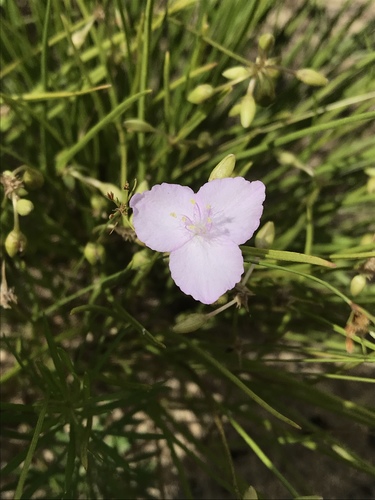
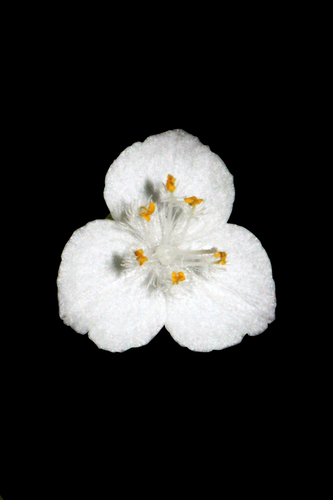
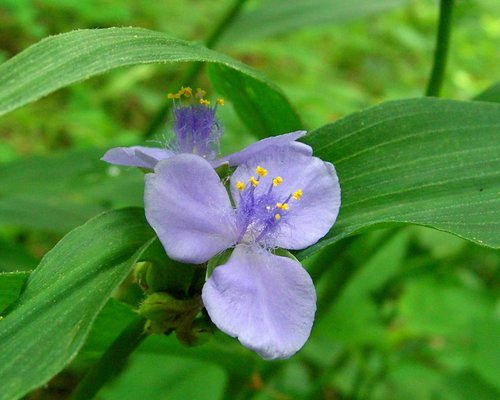
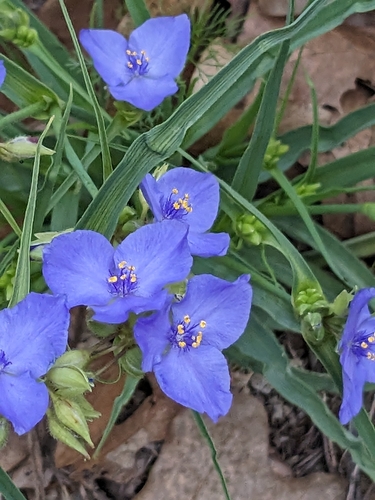
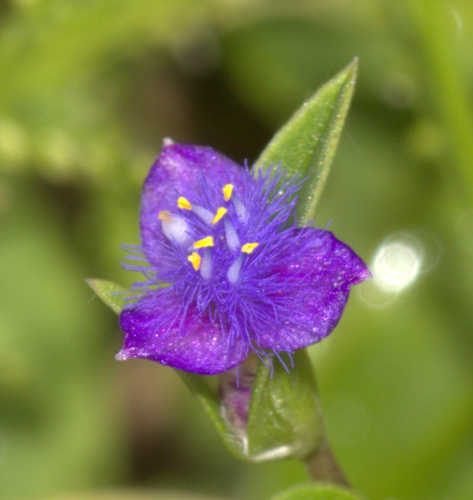
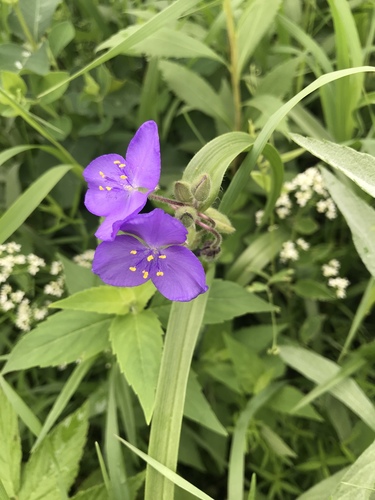
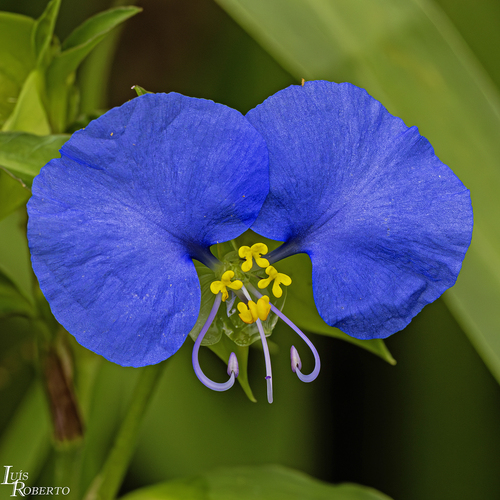
Commelina erecta L. is commonly known as white mouth dayflower, slender dayflower, or widow's tears. This perennial herb typically bears blue flowers, easily recognized by its two large blue petals and one smaller white petal. It is native to the Americas, Africa, and western Asia, and is now widespread across much of the world. Across the Americas, C. erecta occurs in the United States, the West Indies, every country in Central America, and extends south through the tropics into Argentina. In the United States, it grows from South Dakota and Pennsylvania south to Florida and Texas. In the West Indies, it is found throughout Puerto Rico and on multiple Virgin Islands including Saint Croix, Saint Thomas, Saint John, George Dog Island, Anegada, Great Camanoe, Guana Island, Tortola, and Water Island. In western Africa, it is present in Senegal, Guinea, Guinea-Bissau, Sierra Leone, Liberia, Ivory Coast, Ghana, Burkina Faso, Benin, Nigeria, and Bioko. It can grow in a wide variety of both natural and disturbed habitats, including prairies, streambanks, gardens, and roadsides. In North America, C. erecta is eaten by the Northern Bobwhite (Bobwhite Quail), Lesser Prairie-Chicken, white-tailed deer, and cattle. It is visited and pollinated by flies and bees, including syrphid flies, Two-spotted Long-horned Bees, Lasioglossum nymphale, Pure Green Augochlora, and Green Metallic Sweat Bees. It can also be parasitized by the fly Liriomyza commelinae. C. erecta is a wild edible plant consumed by many human groups throughout its range, and is also used as traditional medicine by some communities. It is commonly consumed and used as traditional medicine in Brazil; analysis of its bioactive compounds has found these compounds can act as antioxidant, antibacterial, antifungal, and anti-inflammatory agents. In Uruguay, it is commonly processed into juice to treat eye infections. The Seminole people use it to soothe skin and tissue irritation. In North America, C. erecta typically blooms from May to October. It grows best in partial shade and dry sandy soil, and can be propagated by seed or by transplanting tubers. It is widely considered a weed across its native range and can become invasive, so it should be planted carefully.