About Comesperma sphaerocarpum Steetz
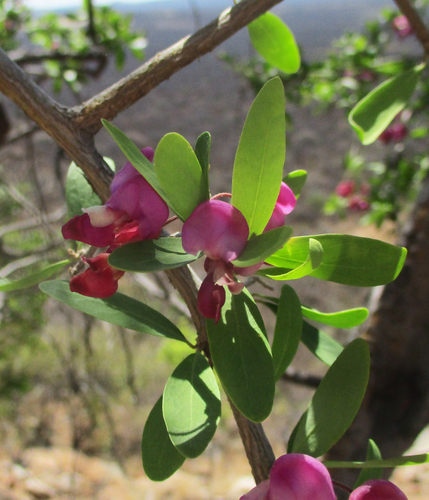
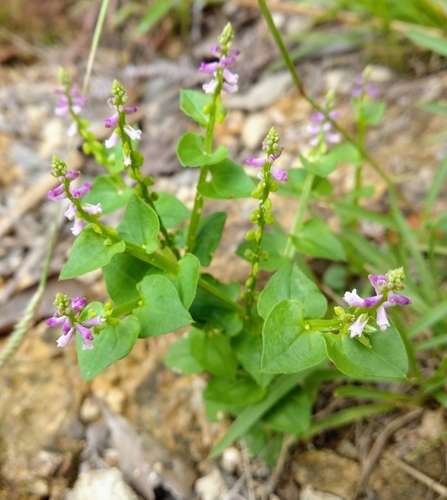
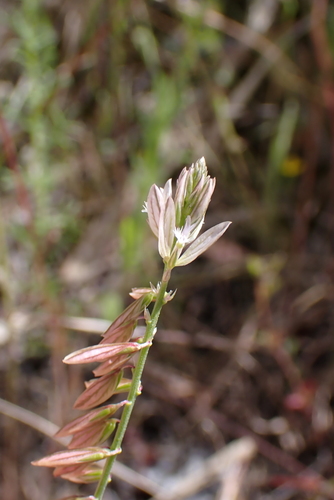
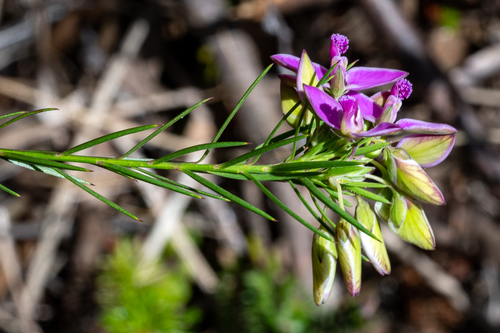
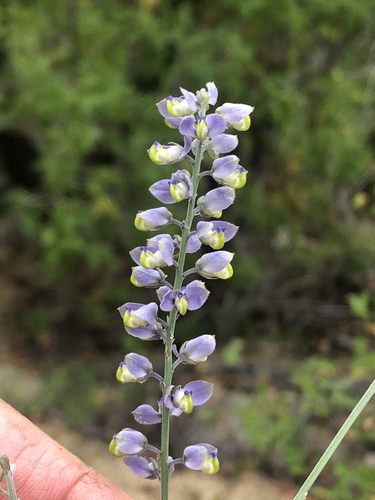
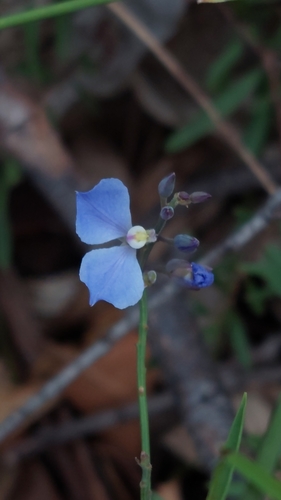
Comesperma sphaerocarpum, commonly known as broom milkwort, is an Australian species of plant in the milkwort family. It is inconspicuous unless it is in flower, and grows to a height of 10 to 30 cm (4 to 12 inches). Its stems are ridged, usually leafless, and grow from the plant’s woody base. Rarely seen leaves grow at the base of the shoot; they are thick in texture, measuring 8 mm long by 2 mm wide. This plant was first published in scientific literature in the 1846 work Plantae Preissianae, written by German botanist Joachim Steetz. Comesperma sphaerocarpum is endemic to New South Wales, Australia, where it occurs along the tablelands and coast, ranging from Warialda in the north to Nowra in the south. In the Sydney region, it can be found in Munmorah State Conservation Area, Royal National Park, Lane Cove National Park, Brisbane Water National Park, and other bushland reserves. Its habitat consists of sandy soils in heathland or low eucalyptus country, and it sometimes grows in high rainfall areas. The specific epithet sphaerocarpum comes from Ancient Greek, and refers to the plant’s ball-shaped fruit. Attractive violet or blue flowers form between October and May, and each flower measures around 1 cm (0.5 in) wide. The fruit is somewhat broadly triangular or round, and tapers where it connects to the stem, although this tapering is not as prominent as it is in other plants of the same genus. The fruit measures 4 mm long. The plant’s growth habit distinguishes it from close relatives: the related Comesperma ericinum, commonly known as pink matchheads or heath milkwort, has erect stems, while Comesperma volubile, commonly known as love creeper, has a twining growth habit. When grown in cultivation, this species prefers sunny positions in moist, infertile soils.