About Colubrina greggii S.Watson
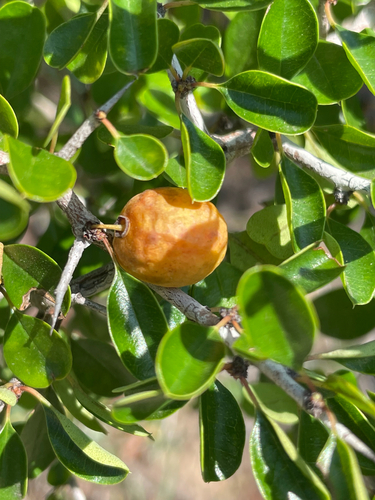
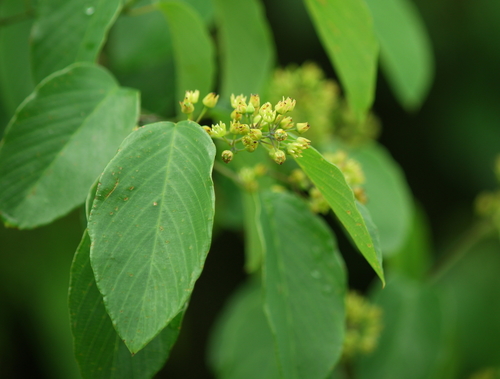
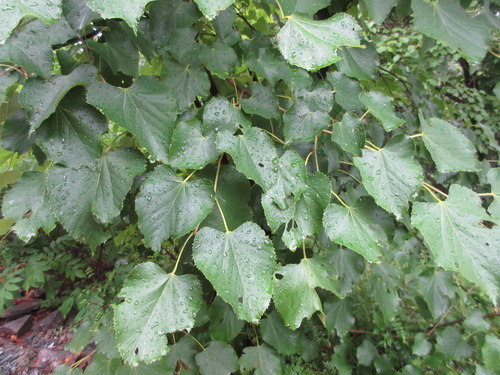
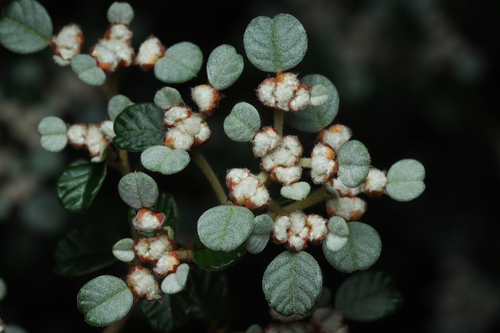
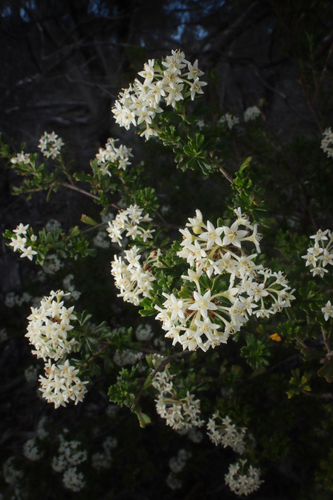
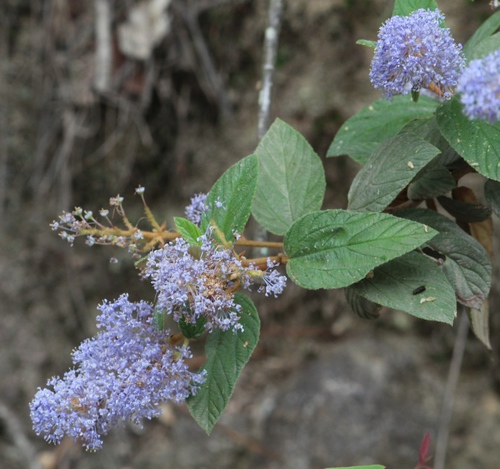
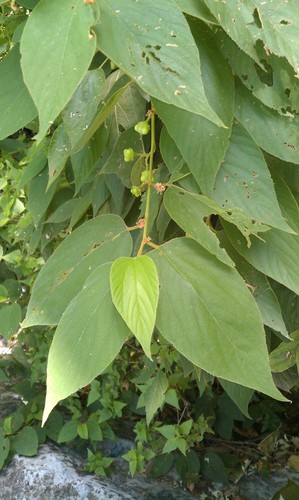
Colubrina greggii S.Watson grows as a 2–3 meter tall shrub, or as a small tree reaching up to 5 meters in height. Its stems are shaped in a zigzag pattern, and range from nearly hairless (glabrate) to covered in loose silky hairs (loosely sericeous). Leaves are alternately arranged on stems, are simple in form, and shaped ovate, lanceolate-ovate, or elliptic-ovate, with finely toothed margins. Leaf blades are 6–18 cm long and 3–8 cm wide, and leaf petioles are 4–20 mm long. Its inflorescence is a thyrse that holds 20 to 80 flowers, with peduncles that measure 5–12 mm in length. The flowers themselves are greenish-yellow, with stamens positioned opposite spoon-shaped petals. Flowering occurs in spring or summer, and can continue through fall. Fruiting pedicels are 5–10 mm long. The fruit is a hard, spherical capsule approximately 8–10 mm in diameter, with remaining calyx tissue forming an equatorial ring around the capsule. This species is very similar to Colubrina arborescens, which grows in southern Florida and the Caribbean, and herbarium specimens of the two species are hard to tell apart. Regarding habitat and distribution, C. greggii occurs in the Mexican states of Coahuila, Guanajuato, Hidalgo, Nuevo León, Queretaro, San Luis Potosi, Tamaulipas, and Veracruz. In the U.S. state of Texas, this species is only found in the lower Rio Grande Valley, where it grows in association with Sabal mexicana at elevations between 0 and 10 meters (0 to 33 feet). In the Mexican states of Queretaro and Guanajuato, C. greggii grows in primary and secondary tropical dry forests, xeric shrublands, and oak forests, at elevations from 300 to 1,600 meters (980 to 5,250 feet).