About Collinsia violacea Nutt.
Collinsia violacea, commonly known as Violet Blue-eyed Mary, is a delicate annual plant belonging to the Plantaginaceae family. Native to western North America, it thrives in moist meadows, open woods, and along stream banks.
Size and Stems
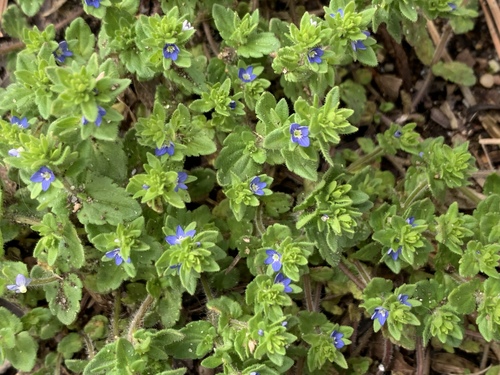
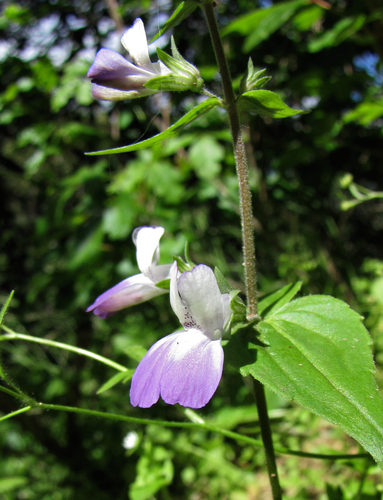
This plant reaches up to 30 cm in height and features slender stems with opposite leaves that are either lance-shaped or oval.
Leaf Texture
The green leaves have a slightly hairy texture on both sides, adding to their charm.
Flower Appearance
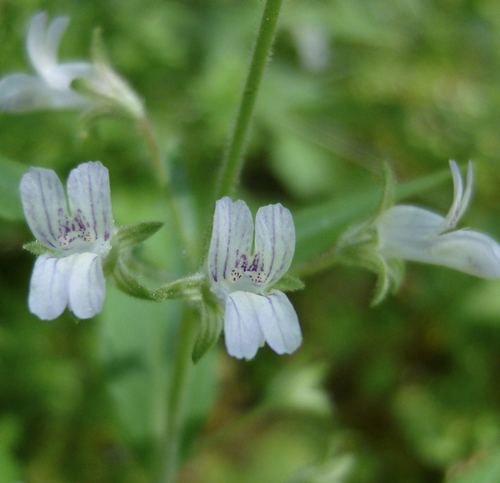
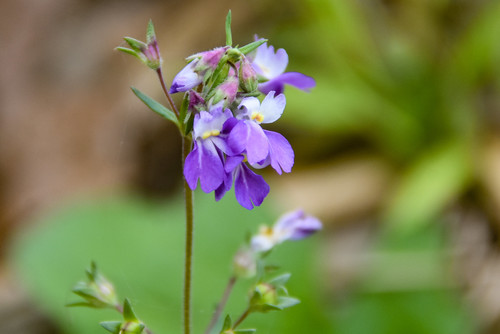
The flowers of Collinsia violacea are small yet strikingly beautiful, boasting violet-blue petals with white markings on the lower lip.
Blooming Period and Pollinators
Blooming from April through June, these flowers attract bees, butterflies, and other pollinators, adding vibrant life to their surroundings.
Cultivation Requirements
Easy to grow from seed, Collinsia violacea thrives in well-drained soil with regular watering during its growing season.
Ornamental Use
Its attractive appearance makes it an excellent choice for borders or rock gardens as an ornamental plant.
Traditional Medicinal Applications
Besides its ornamental value, Collinsia violacea has medicinal uses, traditionally employed by Native American tribes to treat various ailments such as coughs, colds, and sore throats, thanks to its anti-inflammatory properties.
In summary, Collinsia violacea is a charming wildflower that enhances its surroundings with beauty while also offering medicinal benefits.