About Coleus madagascariensis (Pers.) A.Chev.
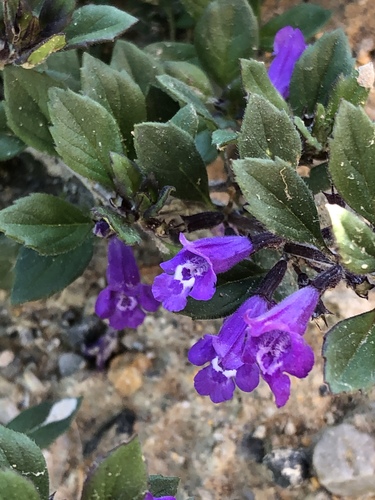
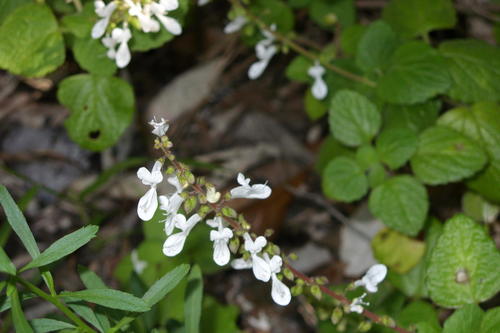
Coleus madagascariensis (Pers.) A.Chev. is a herbaceous, fragrant, semi-succulent, multibranched plant with a sprawling growth habit. It matures into a dense, rambling subshrub that reaches 1 meter in height, and its branches root wherever they touch the ground. Young branches are square in cross-section, and bear opposite leaves. Mature dark green leaves are broadly ovate, with 3-7 pairs of rounded teeth, have some hair on both the upper and lower surfaces, and measure 35 to 40 millimeters in length. The cultivar 'Lynne' produces variegated leaves, with splashes of creamy-white to pure white along the leaf margins. When crushed, the leaves release an oregano-like aroma. This species is native to South Africa, Eswatini (formerly named Swaziland), Mozambique, Mauritius, and Réunion, and it is not native to Madagascar. It grows in the seasonally dry tropical biome, and can be found in shaded subtropical thickets, dry rocky outcrops, and forest edges. It can survive extreme drought by wilting and remaining in a weak, semi-dormant state until rain returns. For cultivation, this plant is easily propagated from cuttings taken in summer, and no rooting hormone is required for propagation. It grows best in lightly shaded areas. Its cultivar 'Variegated Mintleaf' has received the Royal Horticultural Society's Award of Garden Merit. The pungent fragrance of its leaves keeps the plant free of most pests, so herbivorous animals do not feed on it. However, moth and butterfly caterpillars can grow successfully on the plant's leaf tissue, causing damage to the leaves. In traditional medicine, this plant has been used to treat coughs, colds, and scabies. Its pungent leaves and branches are sometimes hung inside homes or rubbed on window sills to repel flies.