About Colchicum hungaricum Janka
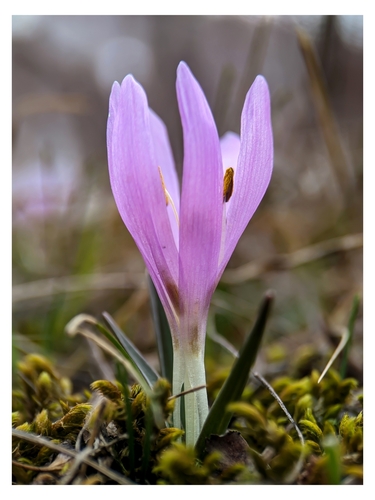
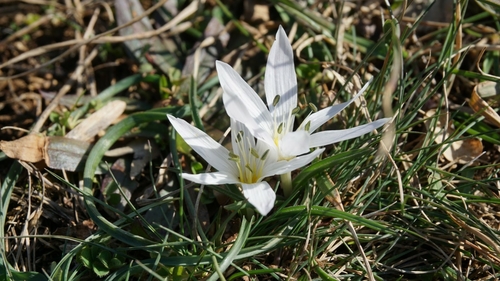
Colchicum hungaricum, commonly called the Hungarian crocus, is a flowering plant species belonging to the genus Colchicum. It can be recognized by its white to pinkish-lilac flowers, which bloom in very early spring.
C. hungaricum is found in several countries across the Balkan Peninsula, including Croatia, Bosnia and Herzegovina, Albania, Bulgaria and Greece. The population of this species in Hungary is its northernmost and most isolated occurrence. In Hungary, the species grows only at one single site on Szársomlyó Hill, which is also called Harsányi Hill, in the Villány Mountains. This site is a karst limestone grassland and bushy steppe habitat with a warm, south-facing microclimate. The shallow Rendzina soils on the slope heat quickly, supporting plant communities with Mediterranean and sub-Mediterranean species. Early botanical research thought this species was endemic to Hungary, but later surveys confirmed it grows throughout the Balkan Peninsula. The Hungarian population is now considered a relict, a surviving remnant from a warmer climatic period. Some botanists propose it dates back to the Riss and Würm glaciations, while others think it originated in the Tertiary period, making it one of the last remaining traces of the subtropical vegetation that once covered the region.
Recent research has uncovered an interesting ecological relationship involving C. hungaricum. Studies carried out in Hungary have recorded that this plant acts as a food source for the moth Cnephasia chrysantheana. Moth larvae have been observed feeding on both the leaves and flowers of C. hungaricum. This discovery extends the known range of host plants for this tortricid moth and provides new information about its bionomics.