About Coeliades pisistratus (Fabricius, 1793)
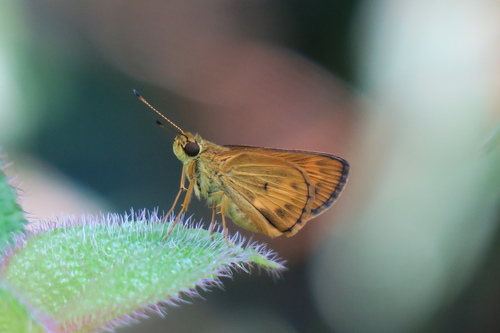
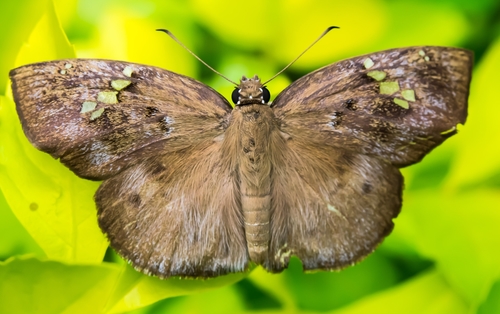
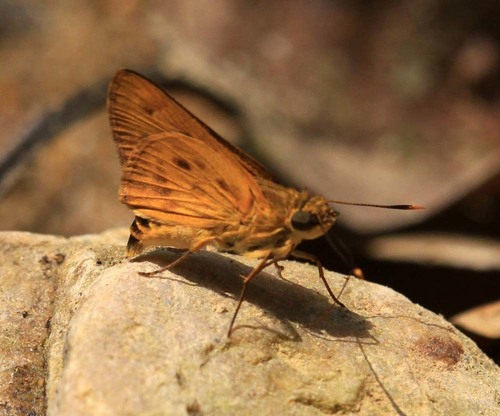
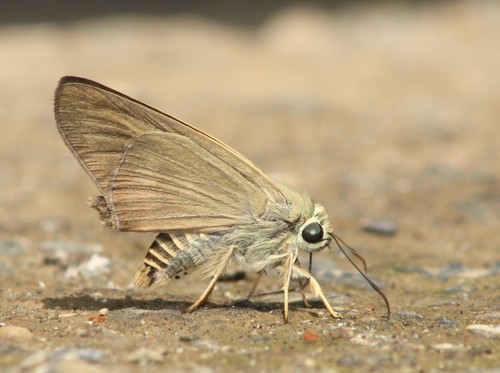
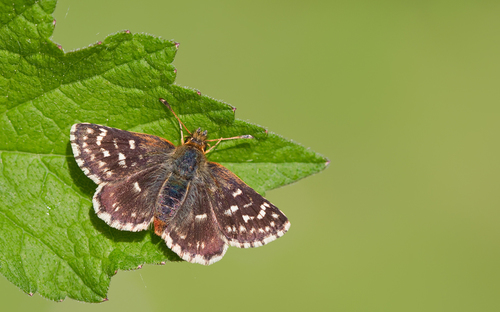
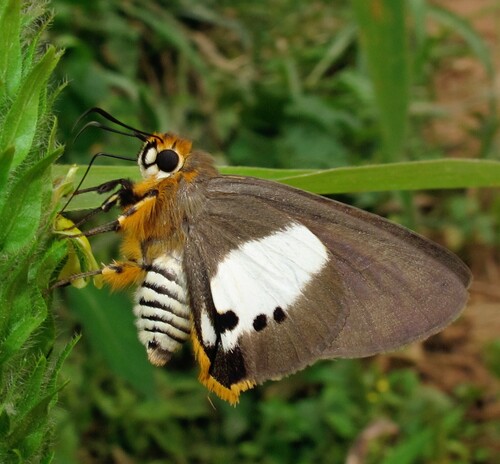
Coeliades pisistratus, first described by Fabricius in 1793, has sexes that look very similar to one another. Females can be distinguished by their larger abdomen and more rounded wings. Males have a wingspan of 55–65 mm, while females have a wingspan of 63–70 mm. In warmer regions, adult individuals are active year-round, with population peaks occurring from September to April. The full larval stage lasts around 40 days, during which the larva progressively modifies leaves from its food plant to create a protective shelter. Eggs are laid on the tip of a new leaf; shortly after hatching, the larva folds this leaf into its initial shelter. In later larval instars, the larva combines two, then several leaves to expand its shelter. This final shelter provides protection throughout the month-long pupal stage. This species inhabits savanna, forest edges, and coastal bush. Its range extends from sea level in southern areas up to an altitude of 2,000 meters in tropical regions. It generally lives in mesic environments, and is less tolerant of extremely dry or extremely moist habitats than the related species Coeliades forestan. Males of this species are territorial. Coeliades pisistratus is distributed across Guinea-Bissau, Guinea, Sierra Leone, Liberia, Ivory Coast, Burkina Faso, Ghana, Togo, Benin, Nigeria, Cameroon, Equatorial Guinea, Gabon, Congo, the Central African Republic, Angola, the Democratic Republic of the Congo, South Sudan, Uganda, Rwanda, Burundi, Ethiopia, Somalia, Kenya, Tanzania, Malawi, Zambia, northern Namibia, Botswana, Zimbabwe, Mozambique, Eswatini, Lesotho, and the South African provinces of KwaZulu-Natal, Mpumalanga, Limpopo, Gauteng, Free State, Northern Cape, and North West. The larvae of C. pisistratus feed on a broad variety of plant species, including Sphedamnocarpus pruriens, Triaspis macropteron, and species in the genera Stephanotis (synonymized under Dregea), Indigofera, Marsdenia, Acridocarpus, and Combretum.