About Cochylis dubitana (Hübner, 1796-1799)
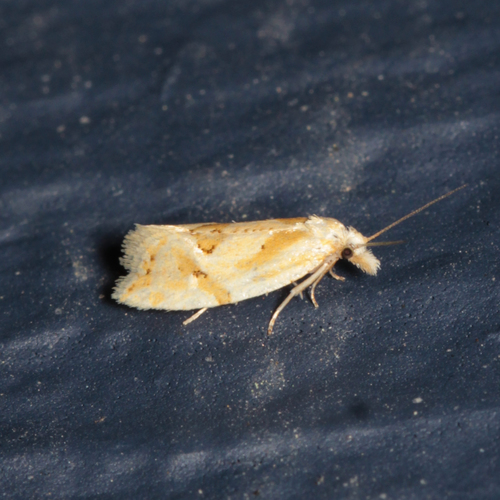
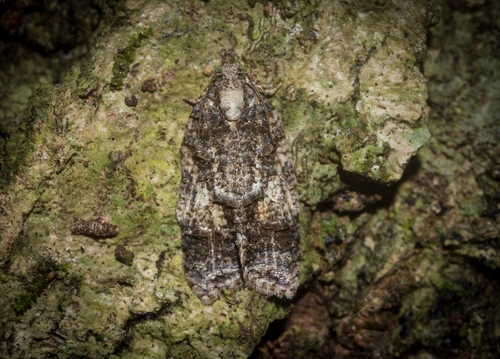
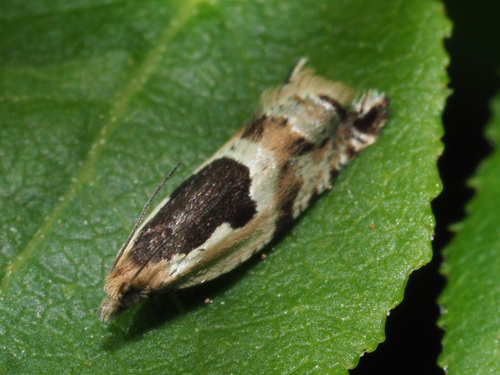
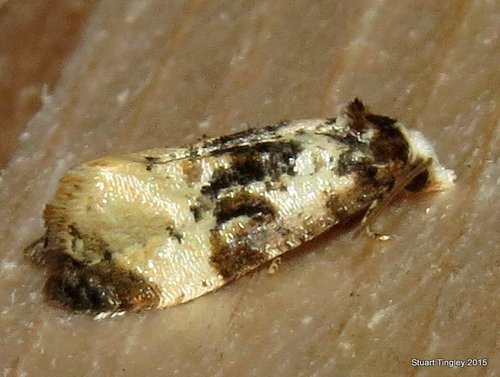
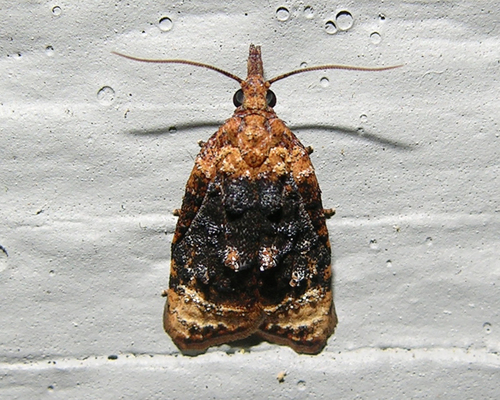
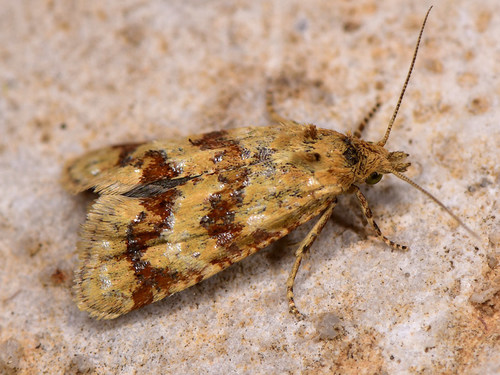
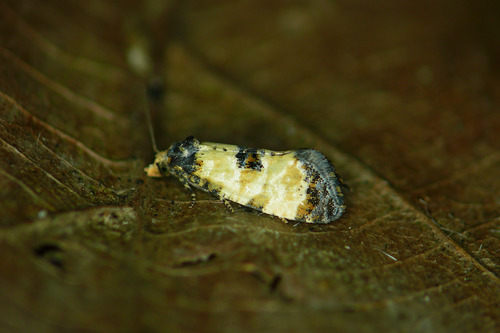
Cochylis dubitana, commonly known as the little conch, is a moth species belonging to the family Tortricidae. Its distribution includes China (Heilongjiang province), most of Europe, the Caucasus, and North America, where it has been recorded from Colorado, Maine, Ontario, and Washington. The wingspan of this moth measures 11 to 16 mm. It has a white head and a dark grey thorax, and the forewing costa is gently curved. The ground colour of the forewings is ochreous whitish or rosy-whitish, with the costa marked with fine blackish streaks (strigulation). The small basal patch and the costal spot that touches it are dark grey. An irregular brownish median fascia is dark grey along the costa and dorsum, and is obliquely interrupted above the middle of the wing. There is a pale greyish ochreous patch above the tornus, and a narrow terminal fascia that is widened on the costa. The forewing cilia are dark grey, mixed with blackish. Hindwings are whitish-grey in males and plain grey in females. The larva is whitish, with a light red-brown head, and the second body segment's plate is yellow with a black edge along its posterior margin. Julius von Kennel provides a complete full description of the species. This species has two generations per year, with adult moths active on the wing in June and again in August. Larvae feed inside the flowers and developing seedheads of a variety of Asteraceae species, including species of the genera Senecio, Crepis, and Hieracium, as well as Sonchus arvensis and Solidago virgaurea. Larvae can be found in July, and again from August to April. They overwinter inside a cocoon among plant debris. Pupation occurs between April and July inside a cocoon on the ground among debris.