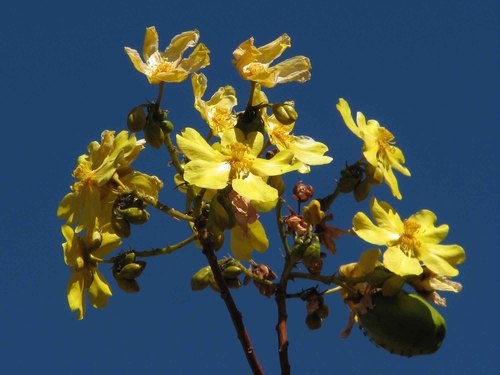
About Cochlospermum fraseri Planch.
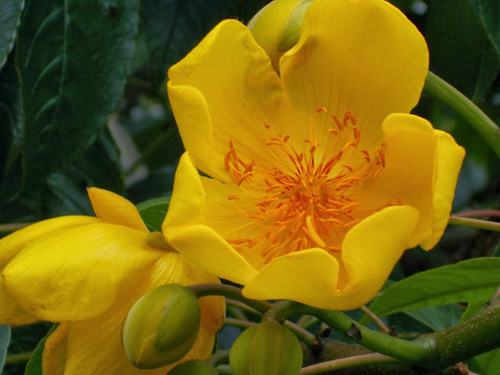
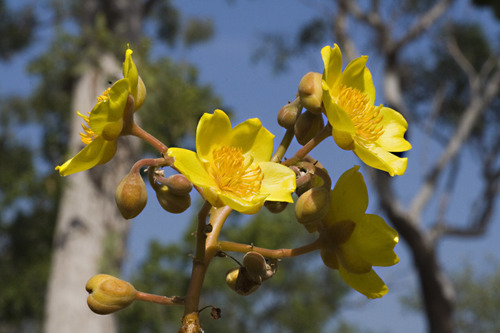
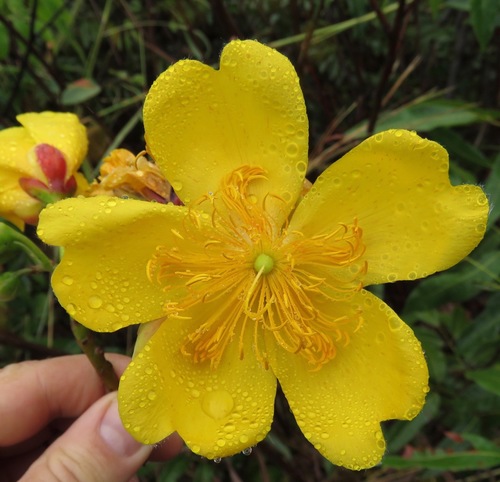
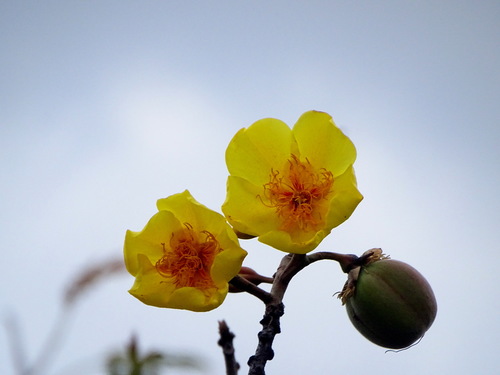
Cochlospermum fraseri Planch. is a deciduous shrub or small tree that can reach up to 7 meters in height. It flowers from March to October, producing terminal panicle inflorescences. Its flowers are asymmetric, with five sepals arranged in two whorls: the two outer sepals are shorter than the three inner sepals, and the flowers have numerous stamens. Flowers often develop when the plant has lost all its leaves. Fruiting occurs from June to March, and the fruit is a woody capsule with 3 to 5 valves. The seeds are surrounded by fluffy, cottony threads, which gives the species its common name of kapok tree. This species occurs in Central Kimberley, Dampierland, Gulf Fall and Uplands, Northern Kimberley, Ord Victoria Plain, Pine Creek, and Victoria Bonaparte bioregions in the Northern Territory, as well as in Central Kimberley, Dampierland, Great Sandy Desert, Northern Kimberley, Ord Victoria Plain, and Victoria Bonaparte bioregions in Western Australia. It grows in open eucalypt woodland across a range of soil types, including sands, gravelly soils, and heavy clay soils. Indigenous people of northern Australia eat the flowers of this plant both raw and cooked, and also eat the roots of young plants. They traditionally used the fluffy seed material as body decoration. For the Jawoyn people, this species acts as a calendar plant: flowering signals the period when freshwater crocodiles lay eggs, and fruiting signals the time to collect these eggs.