About Cochemiea fraileana (Britton & Rose) P.B.Breslin & Majure
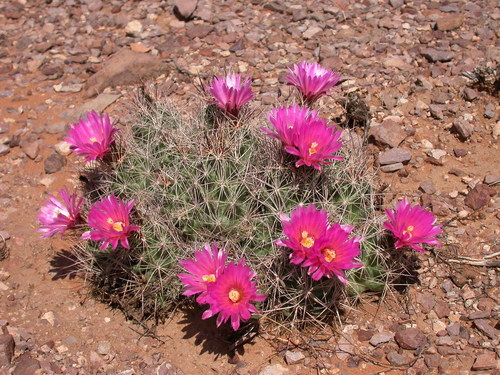
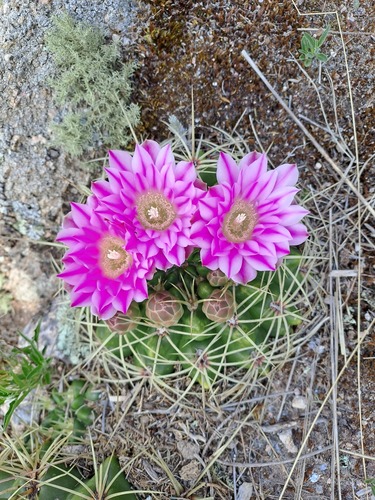
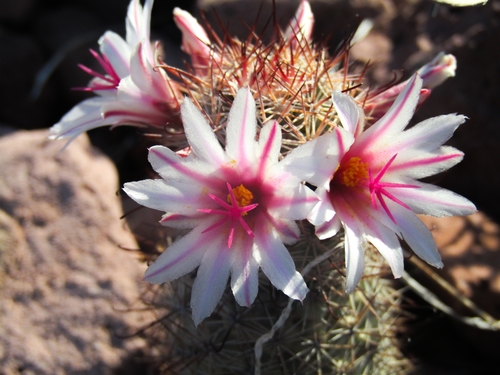
Cochemiea fraileana is a cactus species where the apex bears the plant's spine, and the base produces flowers and fruits. This species grows as slowly offsetting, irregularly formed clusters that vary in size from large to small. It has cylindrical stems that typically measure 3–4 cm in diameter, located near the base within the clump. The stem tissue is green, but may develop a reddish tint when grown in full sunlight. Its tubercles are pyramidal and do not produce latex, and it has fibrous roots. Cochemiea fraileana has 11 to 12 thin, white radial spines, each between 8 and 10 mm long. It also has 3 to 4 dark brown central spines, most commonly around 10 mm long. The flowers of this cactus are light pink with a darker pink central stripe, measure 2.5 to 3 cm in diameter, and have a bright pink stigma. Its fruits are red and contain small black seeds, and flowering typically occurs from May to September. This cactus is endemic to the state of Baja California Sur, Mexico. It is primarily distributed in coastal areas near La Paz and Pichilinque, and on several islands in the Sea of Cortez, including Isla Espíritu Santo and Isla Partida. Cochemiea fraileana is not generally considered easy to cultivate, but it can grow successfully when kept in good conditions with adequate ventilation. As a species adapted to arid climates, it is especially sensitive to overwatering, and requires open potting soil with sufficient air flow. The potting mix must be moderately acidic; peat, other humus sources, and limestone are all detrimental to its growth. This cactus requires maximum sunlight to grow and flower successfully, as it is adapted to warm climates. Frost can also damage the plant. Allowing the plant to enter a winter resting period, where it may shrivel and even lose up to 25% of its summer height, supports its flowering process.