About Cochemiea dioica (K.Brandegee) Doweld
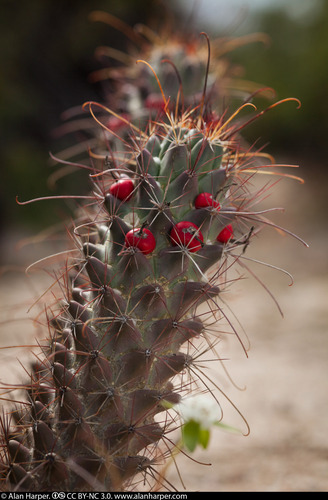
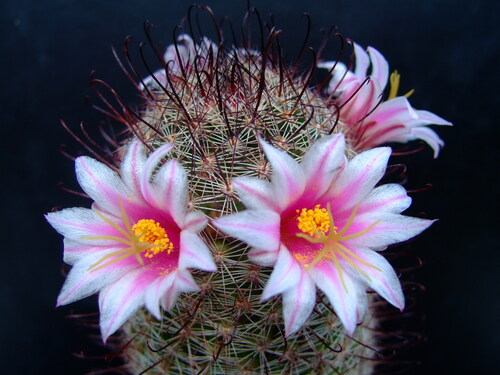
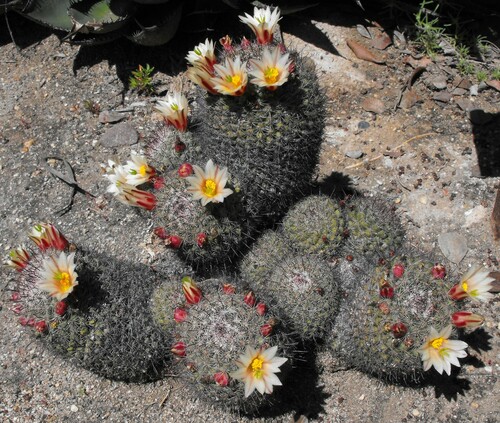
Cochemiea dioica has short, firm tubercles that end in spines. Most of these spines are whitish and straight, but each tubercle has a longer, slightly curved, dark central spine. A single individual can produce both male and female flowers, with flowering occurring from mid-spring to mid-summer. Some plants may also grow bisexual flowers, meaning a single plant can bear all three flower types. Its flowers are white to cream in color, and measure between 10 millimeters (0.4 inches) and 30 millimeters (1.2 inches) long. The fruits it produces are bright red, ovoid, and often thicker at one end. These fruits are edible, with a flavor described as a cross between a strawberry and a kiwi. Its seeds are small, between 0.6 and 0.8 millimeters, black, and pitted. This cactus is found in western Colorado Desert scrub, including within Anza-Borrego Desert State Park, and in coastal sage scrub habitats in Southern California. It also grows in coastal chaparral and Sonoran Desert habitats in the Baja California and Baja California Sur states of Mexico's Baja California peninsula. It grows at elevations ranging from 10 feet (3.0 meters) to 1,500 feet (457.2 meters). Polyploid wild plants of this species, including both tetraploid and hexaploid varieties, have been recorded in Mexico. The Kumeyaay (Diegueño) people of Southern California and Baja California use the raw fruits of Cochemiea dioica as a food source. Cochemiea dioica is cultivated by specialty cactus nurseries and botanical gardens for plant sales. It needs very well-drained soil, so it is commonly grown in pots and raised beds in drought-tolerant gardens.