About Cocculus carolinus (L.) DC.
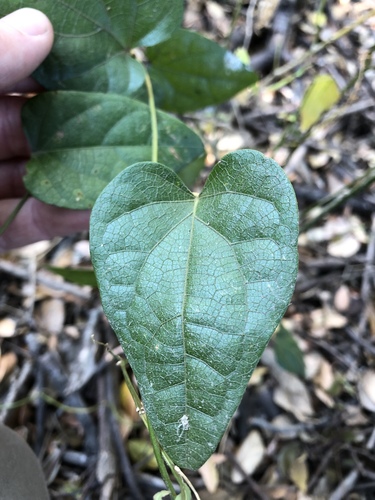
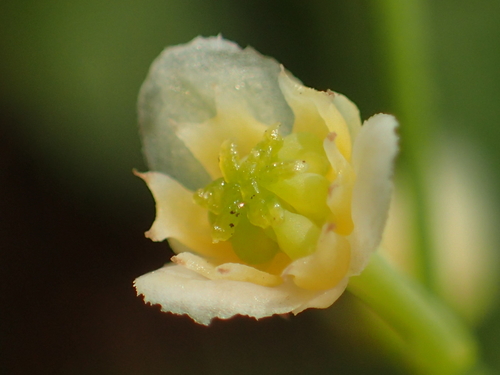
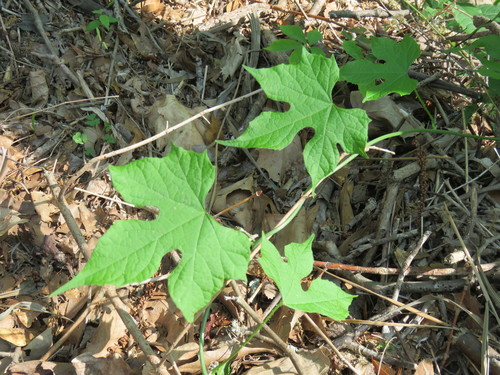
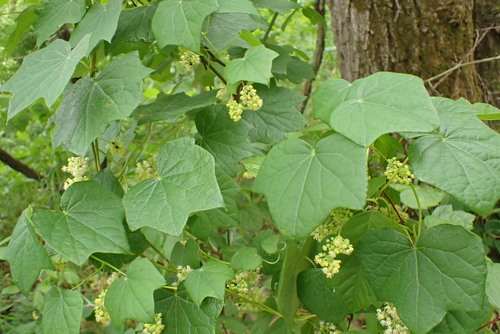
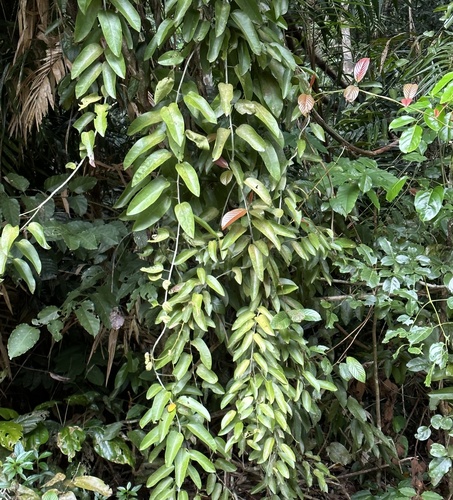
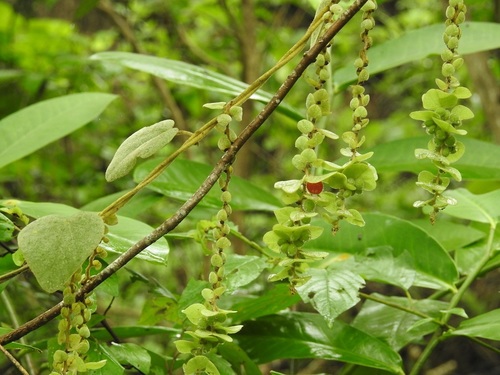
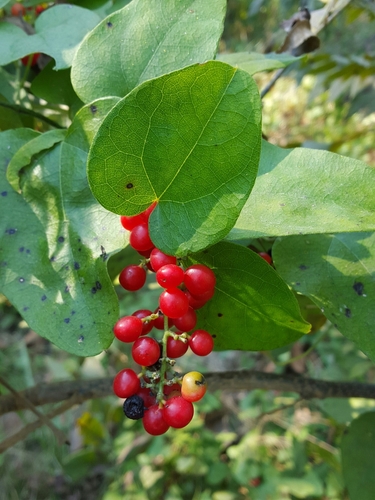
Cocculus carolinus (L.) DC., also referred to as Nephroia carolina, is a climbing woody vine that can reach 5 meters (16 ft) or more in length. Its leaves are generally ovate or triangular, though leaf shape varies widely across individuals. Flowers and fruits are produced on axillary cymes. Small, green male and female flowers occur on separate plants. The plant bears bright red drupe fruits that appear between June and August, growing to 8 mm (0.31 in) in size. Each fruit holds a single seed that resembles a small snail shell, protected by a hard endocarp, the inner section of the ovary wall. This species is native to a range extending from northern Florida to Mexico, and north to North Carolina, Kentucky, southern Illinois, and southeast Kansas. It naturally grows in rocky woodlands and streamside thickets, especially in calcareous regions. It is a weedy species, and can also grow in disturbed habitats including fencerows and waste areas. For cultivation, the plant produces many small flowers. Young Carolina coralbead tissue is greenish. Its seeds require three months of cold stratification to germinate, and germinate within 21 to 30 days at 68 °F. The plant blooms in late spring, and its abundant bright red berry fruits mature by late summer. Because people admire its scarlet fruits, landscapers sometimes let it grow on trellises and fences, or spread naturally among other weeds and shrubs. The plant can grow quickly and is difficult to eradicate once established.