About Coccothrinax argentata (Jacq.) L.H.Bailey
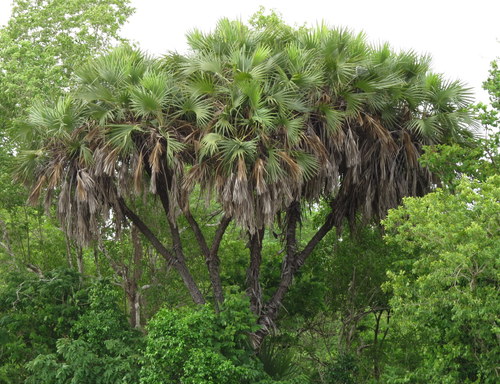
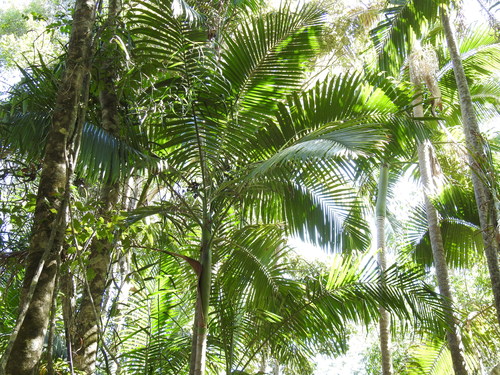
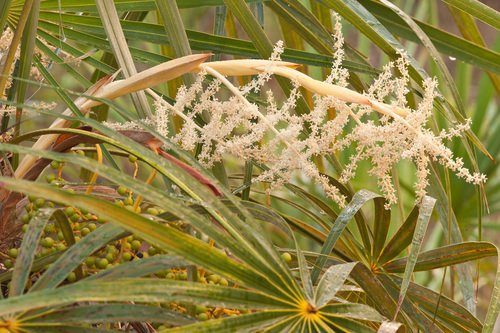
Coccothrinax argentata (Jacq.) L.H.Bailey is a small, slow-growing fan palm, reaching 2 to 6 meters in height. Its leaves are dark blue-green on the upper surface and silver-colored on the lower surface. Measurements taken at Fairchild Tropical Garden recorded an average growth rate of 12 centimeters (4.7 inches) per year. It produces small white flowers that grow on light orange branches. Its fruits are globose, half an inch in diameter, initially green and turning purple or black when ripe. In their natural habitat, silver palms often grow alongside saw palmetto (Serenoa repens) and cabbage palmetto (Sabal palmetto), which have similar fronds. Silver palms can be distinguished from these related species by their smooth vertical trunk and small, crescent-shaped hastula. Coccothrinax argentata is native to Florida in the southeastern United States, southeast Mexico, Colombia, and multiple parts of the Caribbean: the Bahamas, Cuba, Jamaica, the Cayman Islands, Hispaniola (in the Dominican Republic), the southwest Caribbean including Colombian Caribbean islands, the Honduran Bay Islands, and the Turks and Caicos Islands. Its natural habitat consists of rocky, calcareous soil, including coastal scrubland and hammock communities. Populations of this palm growing on the Atlantic Coastal Ridge in Southern Florida are now classified as the subspecies Coccothrinax argentata garberi. This subspecies can be told apart from the nominate subspecies Coccothrinax argentata argentata by its shorter petioles and reduced overall size. Bahia Honda State Park in the Florida Keys hosts one of the largest stands of silver palms in the United States; these palms can be seen on a nature walk just off Sandspur Beach. Ecologically, the endangered Key deer (Odocoileus virginianus clavium) is known to feed on the fruits of the silver palm.