About Cnaphalocrocis medinalis (Guenée, 1854)
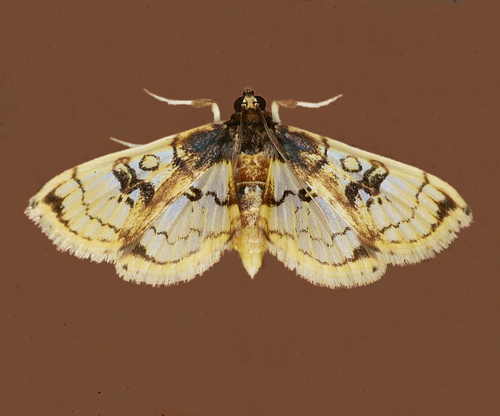
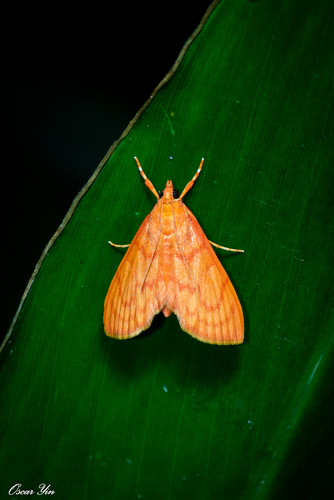
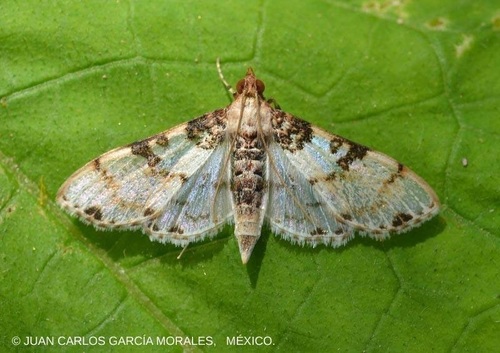
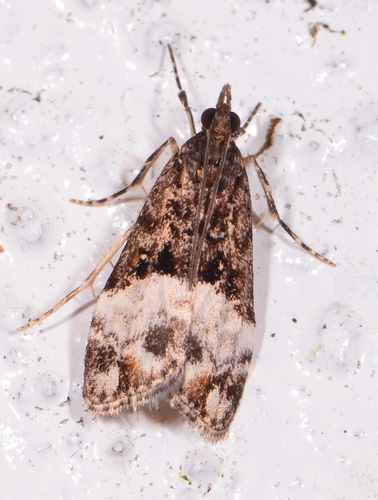
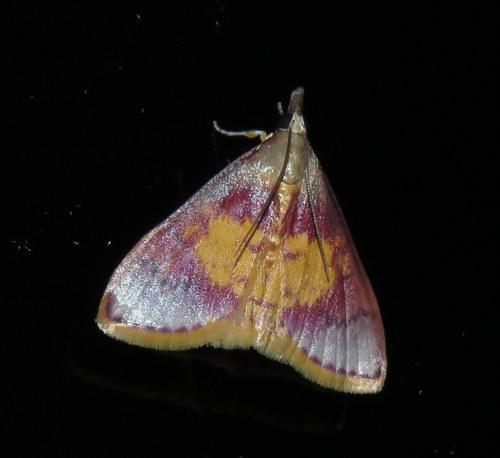
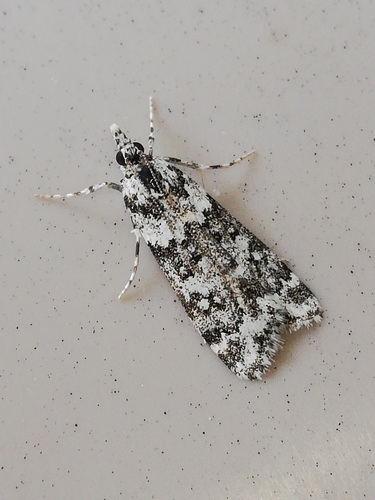
Cnaphalocrocis medinalis, commonly known as the rice leafroller, has distinct features across its life stages. The eggs are typically elliptical and flat, about 1 millimeter long. They start milky white, then turn yellow-brown and develop a visible black spot before hatching. Rice leafroller larvae usually go through five instars. When mature, they reach 15 to 18 millimeters in length. They have a brown head; the thorax and abdomen are green when young, then turn yellowish-green, and become reddish-brown at maturity. Two spiral-shaped black lines are present on the posterior margin of the prothoracic tergum, and there are 8 distinct small black circles on the terga of the mesothorax and metathorax, with six of these circles on the leading segments and two on the trailing segments. Rice leafroller pupae are approximately 9 millimeters long. A single line of fine dark brown hair runs near the leading edge of the 5th to 7th abdominal segments. The pupa's tail tip has eight barbs, and the pupa is wrapped in a thin, white cocoon. Adult rice leafrollers are generally 7 to 9 millimeters long, with a wingspan of 13 to 18 millimeters. They are flaxen in color, and have three brown transverse bands on the forewings, one of which is relatively coarse and short. Male moths have a shiny, concave eyespot in the center of the forewing's leading edge, while female moths do not have this eyespot.