About Clytra laeviuscula Ratzeburg, 1837
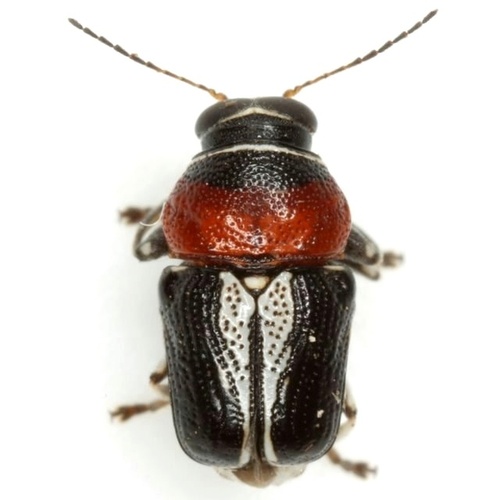
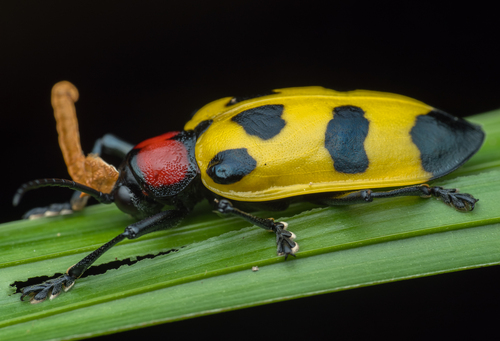
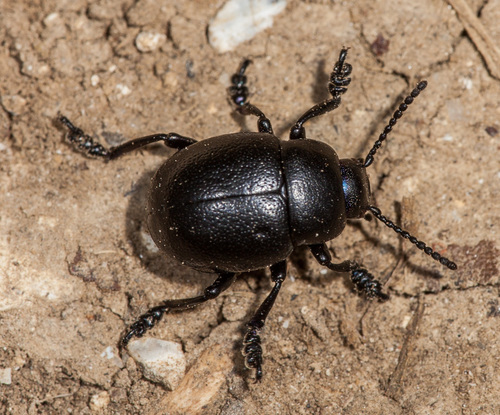
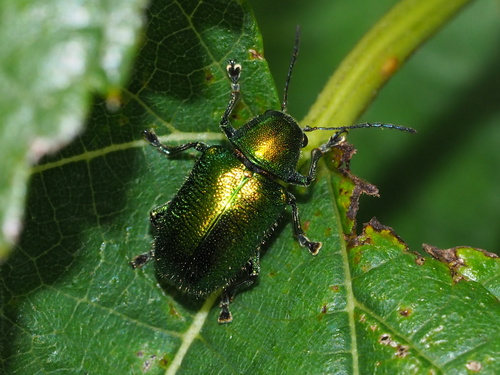
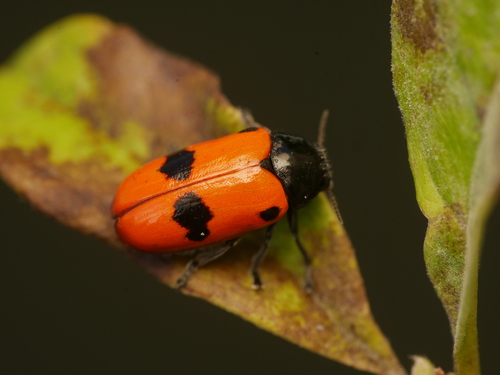
Clytra laeviuscula is a species of leaf beetle first described by Ratzeburg in 1837. Adults of this species can reach a body length of 7.5–11.5 millimetres (0.30–0.45 in), and a body width of approximately 4 millimetres (0.16 in). Individuals have elongated bodies, and shiny red-orange elytra marked with four black spots: two larger spots near the center of the elytra, and two smaller spots on the shoulders. The prothorax is black and shiny, while the head, legs, and quite short antennae are all black. Clytra laeviuscula can be distinguished from ladybirds of the family Coccinellidae by its more elongated body shape, and by its tarsi (the terminal segments of the legs) which have five parts, compared to the three-part tarsi of ladybugs. This species is rather similar in appearance to Clytra quadripunctata. Clytra laeviuscula is distributed across most of Europe, the eastern portion of the Palearctic realm, and the Near East. Its habitats include wet forests, sunny forest edges, dry slopes, dry grasslands, floodplains, and parks.