About Cleorodes lichenaria (Hufnagel, 1767)
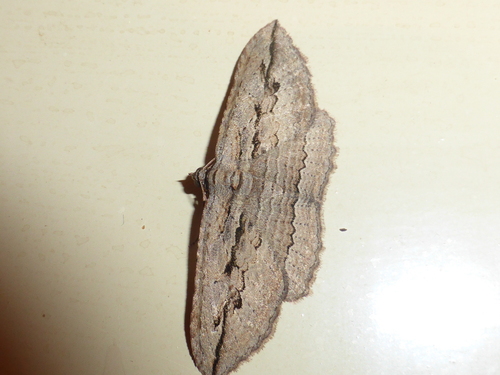
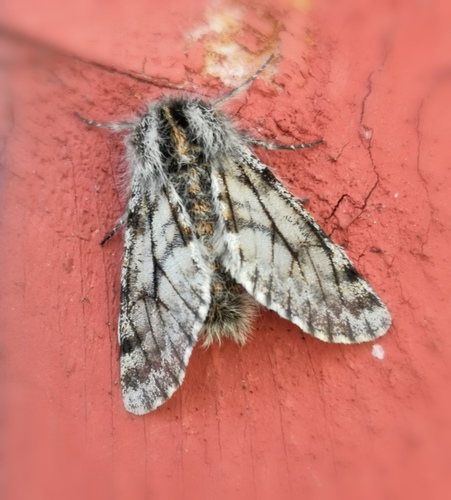
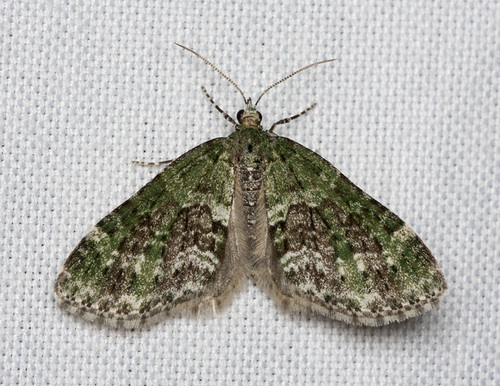
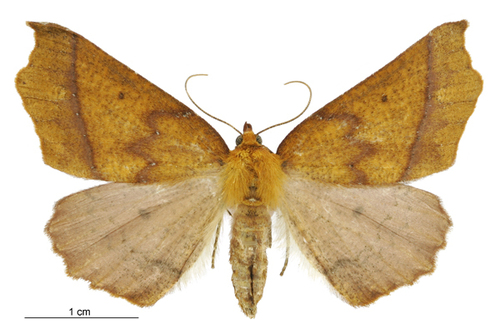
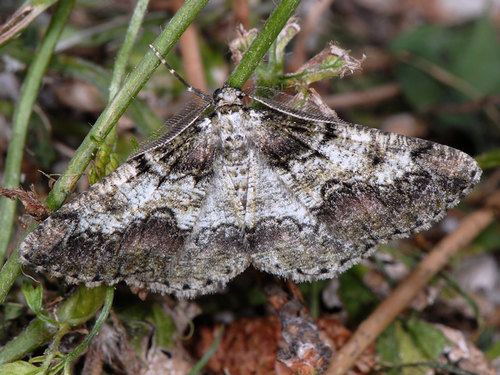
Cleorodes is a monotypic moth genus in the family Geometridae, described by Warren in 1894. The genus contains only one species, Cleorodes lichenaria, commonly known as the Brussels lace. This species was first described by Johann Siegfried Hufnagel in 1767. Cleorodes lichenaria can be found in Europe, the Taurus, and Transcaucasia. This moth has a wingspan of 31–38 mm, and forewings that measure 14–18 mm in length. Newly emerged adults have grey forewings with a greenish tint, which fades very quickly to a pale brown tint; a medium shade between these two is almost never seen. The forewings are darkly dusted, and their fringes are marked with alternating black and white patches. Two black cross lines appear on the forewings, and the outer cross line has a characteristic shape. A strongly serrated black cross line is present on the hindwings, and the margin of the hindwing bears a few black, crescent-shaped lines. Male Cleorodes lichenaria have heavily combed antennae on both sides, while female antennae are filiform. The larva of Cleorodes lichenaria has dorsal humps on its abdominal segments. It is greenish grey with blackish markings, and its coloration closely matches the tree lichens it feeds on. The pupa is slender and deep red brown, and it develops inside a loose network cocoon placed among lichen. Adult moths fly in a single generation from June to August. The larvae feed on lichens, and the larval stage hibernates over winter.