About Cleonymia baetica Rambur, 1837
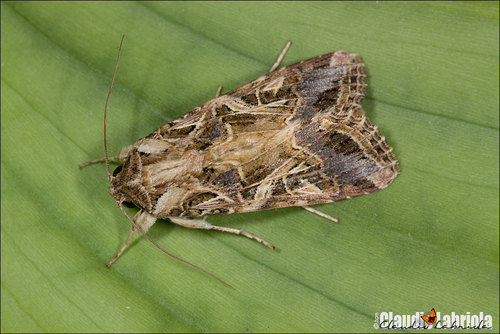
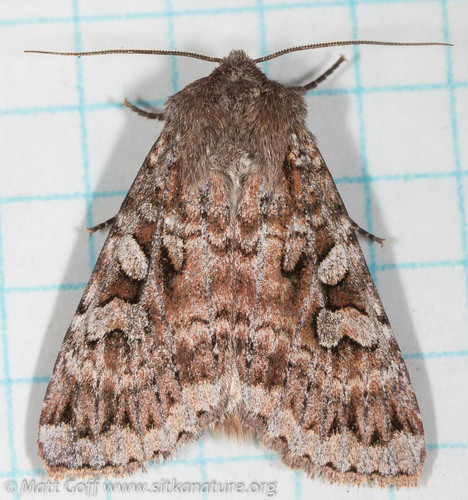
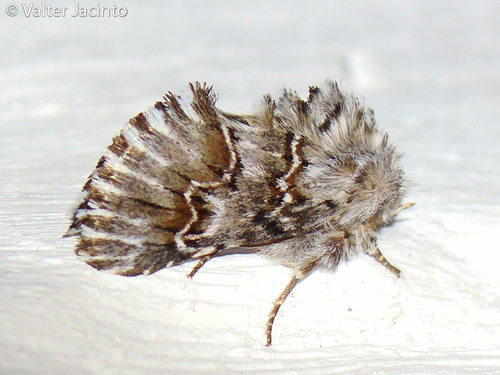
Cleonymia baetica Rambur, 1837 (also known as choenorrhini Dup. and penicillata H. Sch.). Warren's 1914 description of the species is as follows. The forewing is pale grey; the inner and outer lines are white and vertical, each edged with black towards one another, and marked by black points on the veins. The inner line is accompanied by a dark grey cloud, while the outer line is followed by a rufous tinge. There is a black spot at the base of the median vein; the orbicular consists of a few white scales, and the reniform is a prominent white lunule. A tuft of white scales is present in the middle of the submedian fold. The veins towards the termen are broadly white, extending out into the fringe. The hindwing is olive brownish, with darker veins; the basal half is whitish, and the fringe is mottled brown and white. This species is found only in southern Europe, including south-eastern France, Spain, and Sardinia; it also occurs in Algeria, Asia Minor, Syria, Palestine, and Georgia. The larva is green with yellow dorsal lines, red lateral lines, and red spiracular lines; the spiracles are yellow with dark rings, and the larva feeds on Helianthemum.