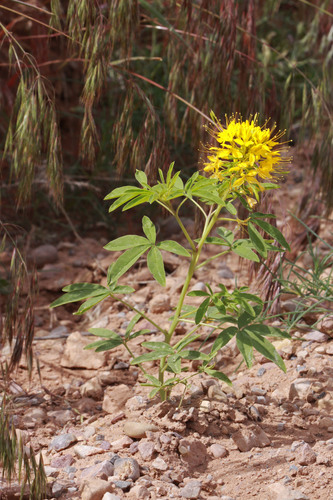
About Cleomella platycarpa (Torr.) Roalson & J.C.Hall
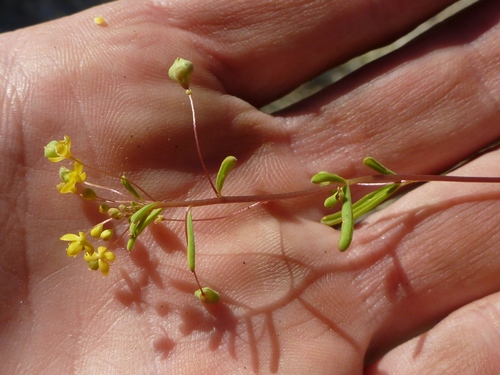
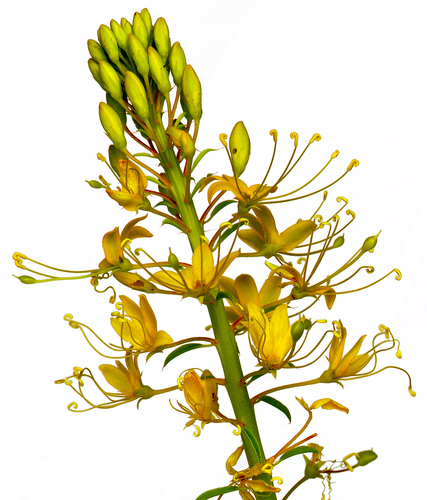
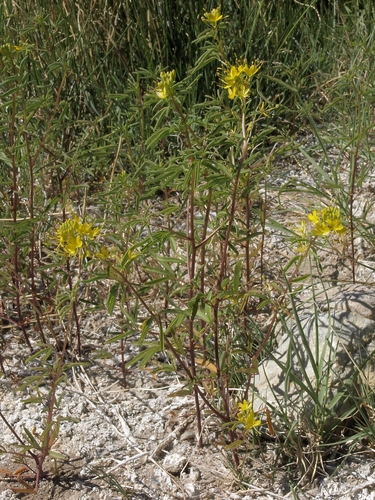
Cleomella platycarpa is a species of flowering plant in the cleome family, with the common names golden bee plant and golden spiderflower. It is native to the western United States, ranging from northeastern California to Idaho, including the Modoc Plateau. It grows on clay and volcanic soils within sagebrush habitat at elevations between 800 and 1200 meters. It is an annual herb that branches at the base, producing several erect stems that reach up to about 60 centimeters (24 inches) in height. The stems are green with a purple tint, densely covered in glandular hairs, and bear many leaves. Each leaf is divided into three small leaflets. The tip of each stem holds a raceme of many flowers. Most flowers have four yellow sepals and four yellow petals, surrounding a center of many yellow stamens. The fruit is a flat, hairy capsule up to 2.5 centimeters long, which hangs from the long, persistent flower receptacle. Some Plateau Indian tribes used an infusion of this plant to treat children's colds, and applied a mashed preparation of the plant to the skin to treat fevers. Cleomella platycarpa is similar to Cleomella lutea, but can be distinguished by its differences in leaf structure and capsule shape.