About Clematis vitalba L.
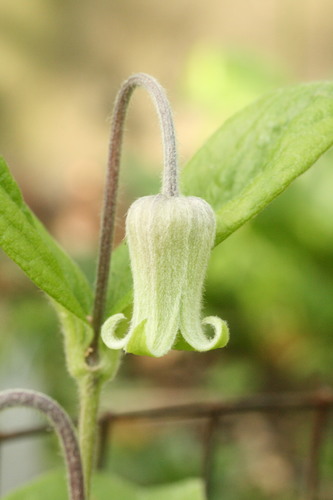
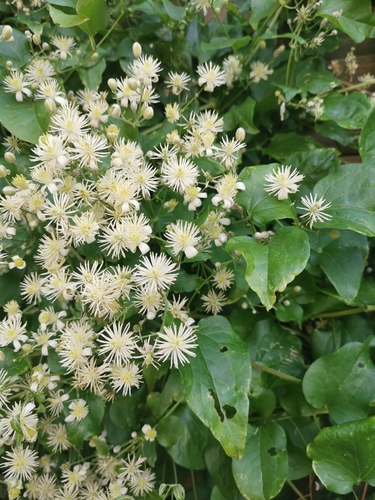
Clematis vitalba L. is a climbing shrub with branched, grooved stems and deciduous leaves. It bears scented greenish-white flowers with fluffy underlying sepals. Each inflorescence produces many fruits, each with a long silky appendage; when grouped together these appendages create the characteristic appearance that gives this species its common name old man's beard. The grooves along its stems are easily felt when the plant is handled. The larvae of a wide range of moth species feed on this species, and many of these moth species rely on Clematis vitalba as their sole foodplant, including the small emerald, small waved umber and Haworth's pug. This species has the following reproductive characteristics: its inflorescence is a biparous cyme, its flowers are hermaphrodite, and pollination occurs via insects (entomophilous). It produces achene type fruits that contain seeds, which are dispersed by wind. Clematis vitalba grows in mid-European shrubberies, mountainsides, and moderately eutrophic regions, within the Holarctic distribution. It grows well in limey, base-rich alkaline soils, and prefers a moist climate with warm summers. It is native to Eurasia and North Africa. Clematis vitalba has several documented historical and regional uses. During the Stone Age, it was used to make rope in Switzerland. In Slovenia, its stems were used to bind crops and weave baskets for onions; they were especially useful for binding grain sheaves, because mice do not gnaw on the stems. In Italy, harvested sprouts of the plant are used to make omelettes; these sprouts are called "vitalbini" in Tuscany and "visoni" in Veneto.