About Clematis montana Buch.-Ham. ex DC.
Common Names and Taxonomy
Clematis montana, commonly known as mountain clematis, Himalayan clematis, or anemone clematis, is a flowering plant belonging to the buttercup family Ranunculaceae.
Growth Habit
It is a vigorous deciduous climbing plant.
Flowering Period
In late spring, it becomes covered in a mass of small blooms that last for approximately four weeks.
Flower Characteristics
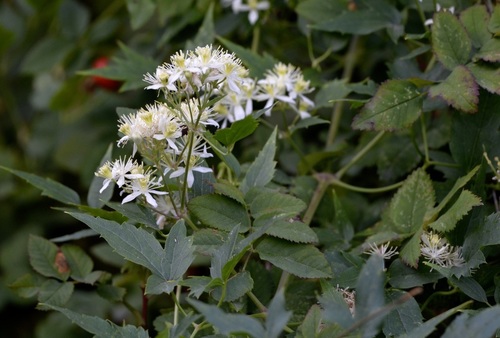
The scented flowers are white or pink, have four petals, and feature prominent yellow anthers.
Native Range
This species is native to mountainous regions of Asia, ranging from Afghanistan to Taiwan.
Cultivation Context
Clematis montana is a popular garden plant grown in temperate regions.
Landscape Use
It can scramble up and over unsightly structures such as sheds and fences.
Mature Size
If left unpruned, it can reach up to 12 m (39 ft) in size.
Faunal Interactions
This plant attracts bees, butterflies, and hummingbirds.
Cultivar Varieties
Many varieties and cultivars have been developed for horticultural use, including C. montana 'Alexander'; C. montana var. grandiflora AGM, which bears larger flowers than the original species; C. montana var. rubens 'Broughton Star' AGM, which produces double, deep pink flowers; 'Elizabeth', which has pale pink flowers; 'Freda'; 'Pink Perfection'; 'Tetrarose' AGM, which has deep pink flowers; and C. montana var. wilsonii, which flowers later and has chocolate-scented blooms.
Award Designation
Any cultivar marked AGM has earned the Royal Horticultural Society's Award of Garden Merit.