About Clematis forsteri J.F.Gmel.
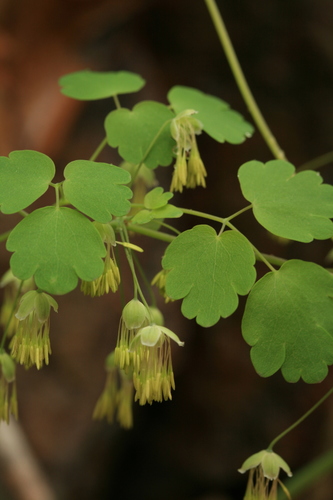
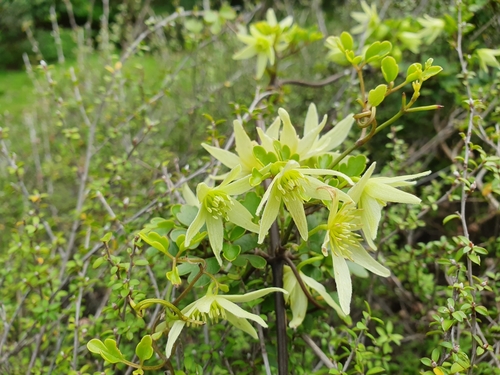
Clematis forsteri J.F.Gmel. is a woody clematis vine that grows well over other bushes, producing creamy yellow-white flowers arranged in groups of three. Flowers bloom from September to March, and are followed by fruits. This species can be distinguished from other closely related clematis by several key traits: it has smaller flowers than Clematis paniculata, it lacks the brownish hairs present on Clematis foetida and C. cunninghamii, and its sepal tops are yellow-green, evenly colored, and mostly hairless, unlike the traits seen in Clematis petriei. This species grows in the North and South Islands of New Zealand, occurring in areas south of Auckland and north of Canterbury. It inhabits lowland forests, and is most often found on forest margins or in open, well-lit locations such as streamsides or areas of brush. Birds feed on the nectar produced by this plant, and the vine also provides shelter for native lizards. For human use, Māori peoples used the flowers of this plant to make headdresses, and the plant was known by many different names in the Māori language. Stems of Clematis forsteri were mixed with clay as a binding agent to fortify pā walls, and walls constructed with this material were called koperu or parihi. The plant's leaves and sap were used to treat blisters in humans, and to treat chafing on horses' fetlocks.