About Clematicissus opaca (F.Muell.) Jackes & Rossetto
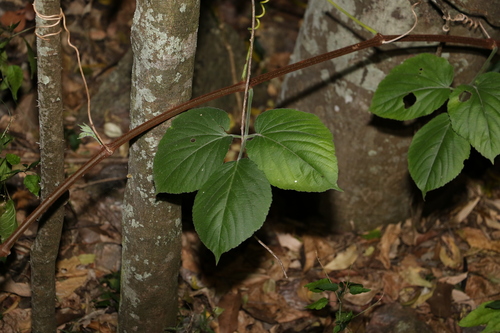
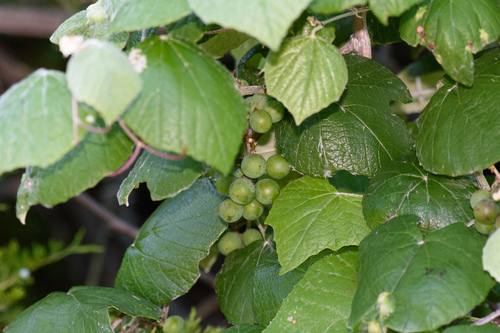
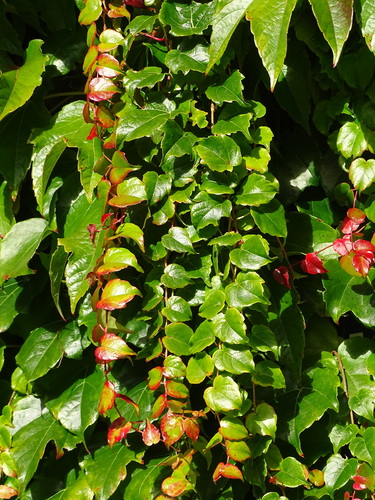
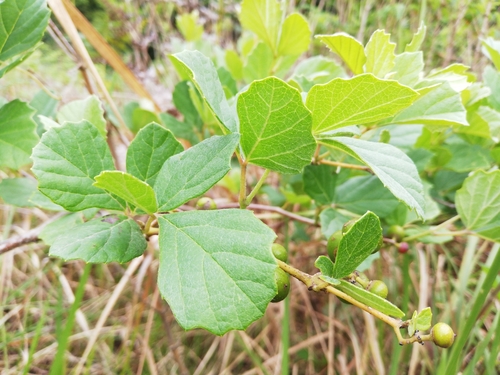
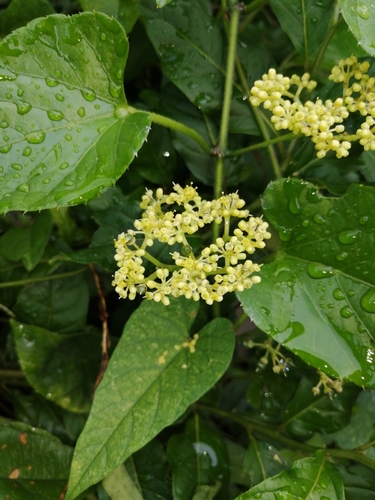
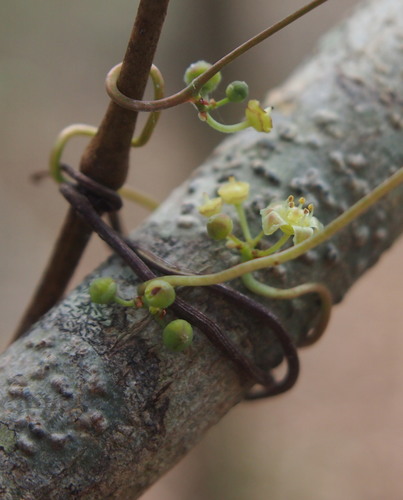
Clematicissus opaca, commonly known as small-leaf grape, pepper vine, small-leaved water vine, yaloone and wappo wappo, is a small vine endemic to Australia. This species naturally occurs on rocky sites in monsoon forest, littoral rainforest and open forest, and it is sometimes grown as a garden plant. It is mainly limited to coastal and sub-coastal regions of Queensland and New South Wales, though it also grows inland west of the Great Dividing Range in central New South Wales. It is a relatively small vine, with stems reaching 6 metres or less in length. Its leaves are palmate, with central leaflets larger than the lateral leaflets. Leaf shape and size are highly variable, both between different plants and on the same individual plant. Leaves can have as few as three leaflets or as many as seven. Leaflets may be sessile, or attached via a petiole, and may be elliptical, ovate or narrow lanceolate in shape. Leaf margins can be either entire or toothed. This species was originally classified as Cissus opaca, but a combination of genetic and morphological traits led to its reclassification into the genus Clematicissus. Like its close relative Cissus, this vine climbs using tendrils that grow opposite each leaf. Tiny flowers form on inflorescences that grow from branches of these tendrils. After flowering, it produces globular black fruit around 15 mm in diameter. These fruits are edible, though not particularly good-tasting, and were occasionally eaten as food by Aboriginal people. Clematicissus opaca grows from tuberous roots, which allow the plant to resprout after fire or grazing. These roots were also used as food by Aboriginal Australians.