About Claytonia sibirica L.
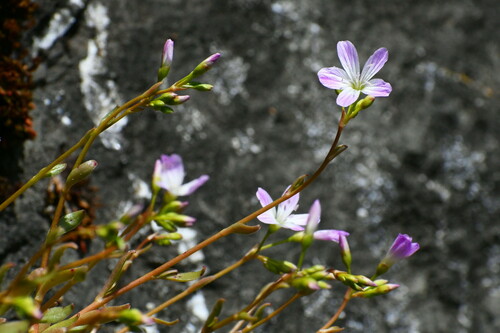
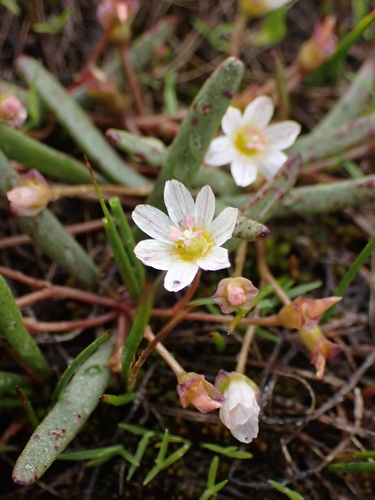
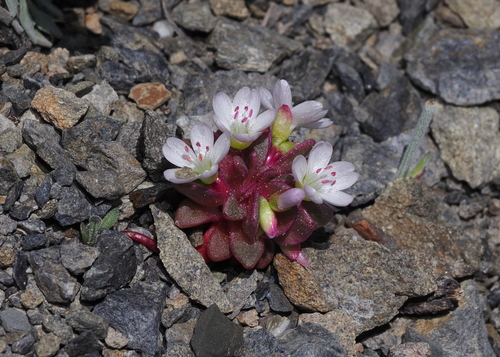
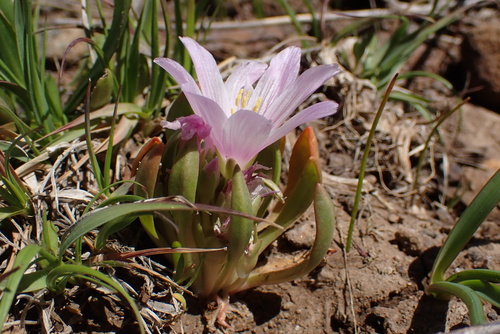
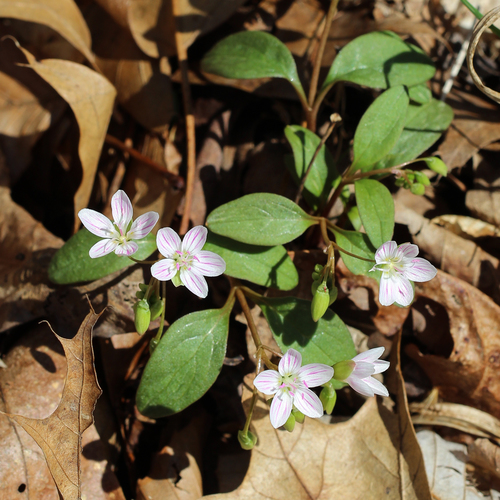
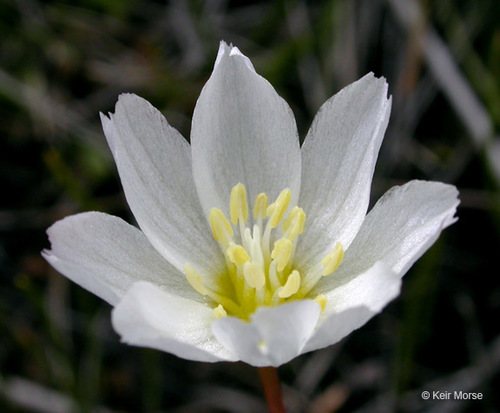
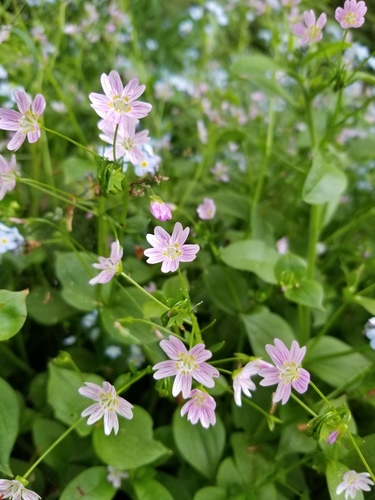
Claytonia sibirica L. grows in moist woodland habitats. This species can be a long-lived perennial, biennial, or annual. It produces hermaphroditic flowers that are protandrous and self-fertile. Numerous fleshy stems grow together to form a basal rosette. Leaves can be linear, lanceolate, or deltate in shape. Fully open flowers measure 8 to 20 mm across, and have five petals that can be white, candy-striped, or pink. Flowering typically occurs between February and August, though some individuals will continue blooming into late autumn. This plant is native to the Commander Islands (including Bering Island) of Siberia, and western North America. In western North America, its native range extends from the Aleutian Islands and coastal Alaska south through Haida Gwaii, Vancouver Island, and the Cascade and Coast Ranges, reaching its southern limit in the Santa Cruz Mountains. Native populations also occur in the Wallowa Mountains, Klamath Mountains, northern Idaho, and the Kootenai region. It was introduced to the United Kingdom by the 18th century, and has since become very widespread there. Similar to Claytonia perfoliata, the aboveground parts of Claytonia sibirica can be eaten either raw or cooked. Some leaves of this plant have an unpleasant taste or aftertaste.