About Claytonia lanceolata Pursh
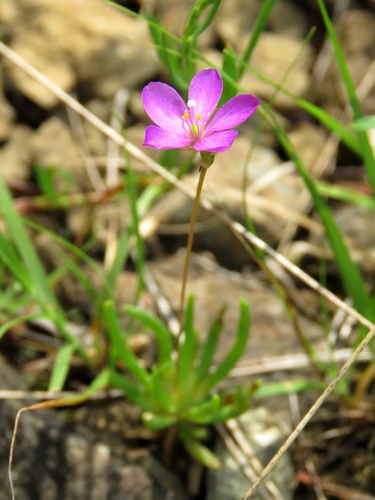
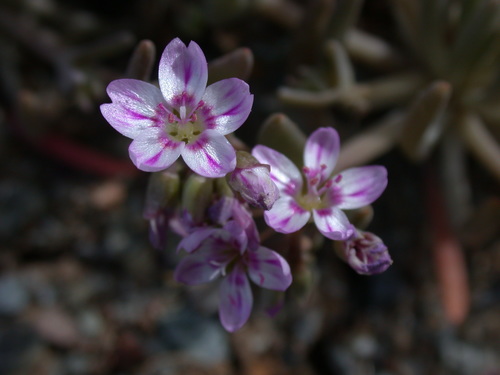
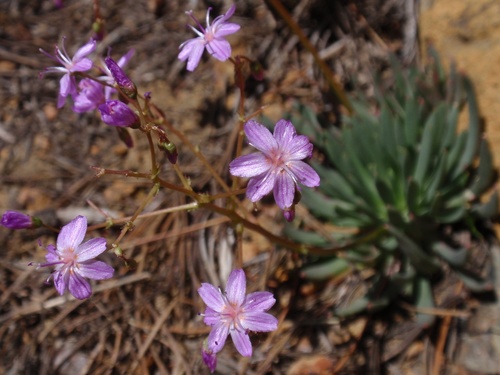
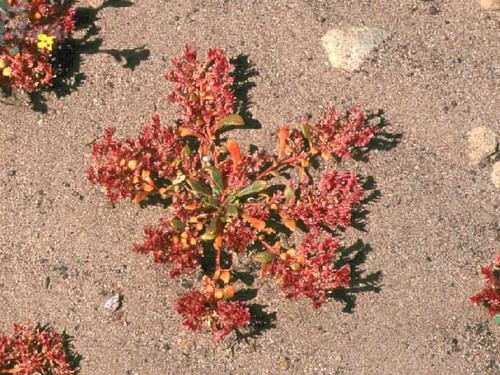
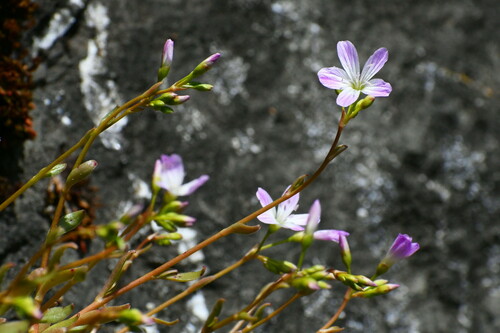
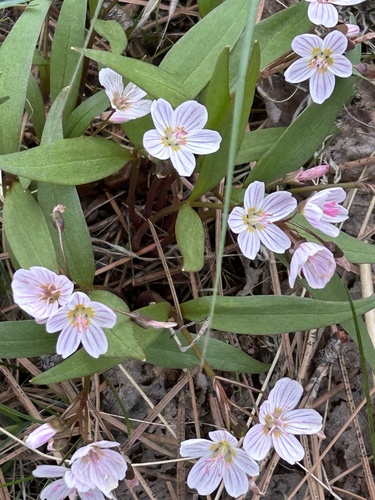
This somewhat rare plant, Claytonia lanceolata Pursh, is native to western North America. It grows in sagebrush steppe and foothills, ranging up to alpine slopes, and thrives in the rocky soil of alpine climates that experience year-round snowmelt absence. It is a perennial herb that grows from a tuber 1 to 3 centimeters wide. It produces a short, erect stem that reaches a maximum height of 15 cm (6 in). At its smallest size, the plant only produces its first two rounded leaves before flowering and dying back. Its thick leaves store water. If the plant continues growing, it produces two thick, lance-shaped leaves higher up on the stem. Star-shaped flowers grow in inflorescences holding 3 to 15 blooms. The flowers are white or pink, often with veiny stripes and yellow blotches near the base of each petal. The fruit is a small capsule containing a few black, shiny seeds. The entire plant is edible raw or cooked, including the potato-like tuber it grows from. Some sources report the bulbs must be cooked to remove toxins. Native Americans ate the roots and pods, which can be cooked and eaten like potatoes. The leaves can be eaten raw or cooked. The Okanogan-Colville, Okanogan, and Nlaka'pamux Native American peoples used the tuber of this plant for food and for animal fodder. Commonly called western spring beauty, this plant is occasionally grown in gardens by people interested in wildflower gardening. Outside its native habitat, it will not persist if it experiences extreme drying during the summer, or flooding during rainstorms.