About Cladonia subradiata (Vain.) Sandst.
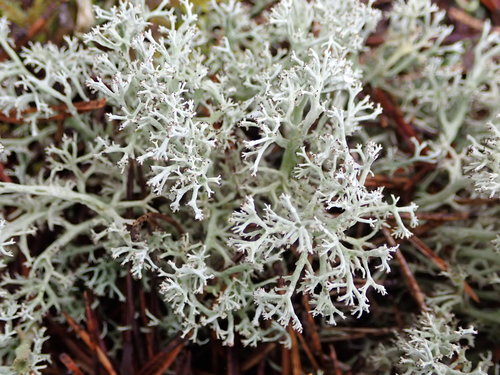
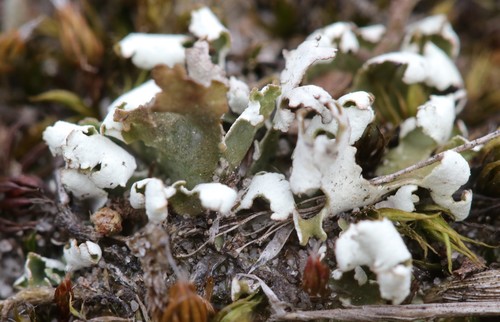
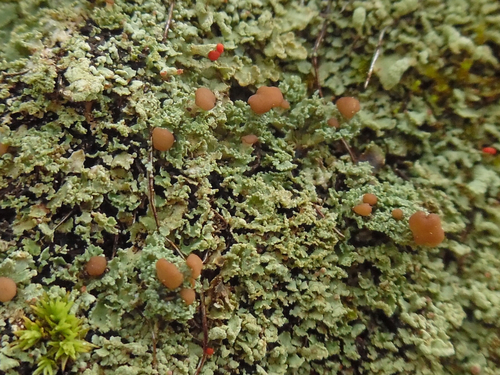
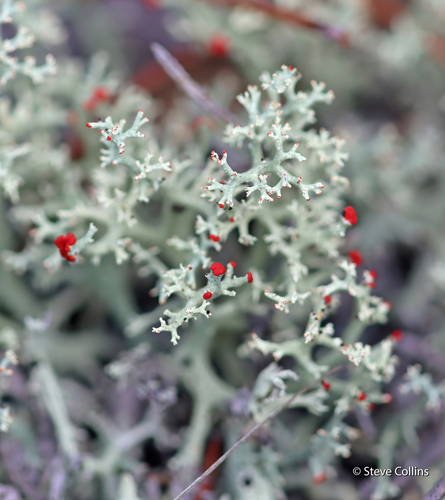
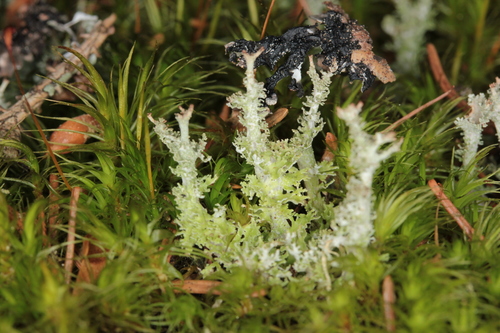
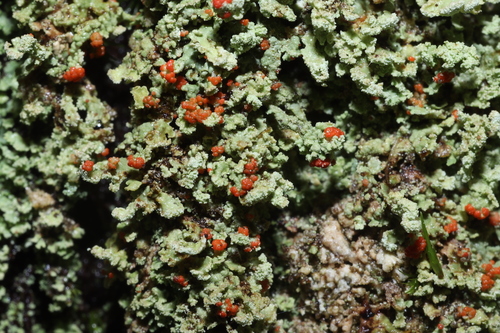
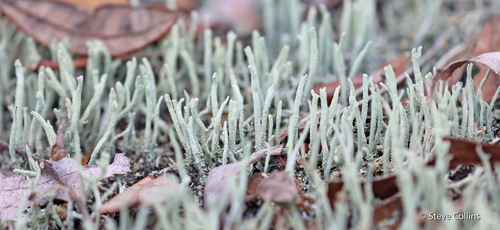
Cladonia subradiata (Vain.) Sandst. has a small, erect scaly primary thallus. Its podetia are whitish, 1–2 cm (0.4–0.8 in) long, often brown, rarely branched, with acute tips or tiny cups, and bear small scales especially at the base. Apothecia are rare; when they do appear, they are spherical and colored reddish or brown. In lichen spot tests, this species gives a PD+ red reaction and a K− reaction. It contains the lichen compounds protocetraric acid, fumarprotocetraric acid, ursolic acid, along with two chemically uncharacterized compounds called Cph-1 and Cph-2. Cladonia subradiata has often been confused with Cladonia balfourii, and the two species can be distinguished by their chemistry; however, Index Fungorum lists the two species as synonyms. This lichen is widely distributed across Central and South America, with its North American range extending as far north as North Carolina. In South America, it has been collected from Brazil, Chile, Argentina, Paraguay, and Guyana. It has also been recorded from Asia, Africa, Papua New Guinea, New Caledonia, Australia, and New Zealand. Cladonia subradiata grows in primary montane rainforests, and prefers growing on humus and boulder substrates.