About Cladonia arbuscula (Wallr.) Flot.
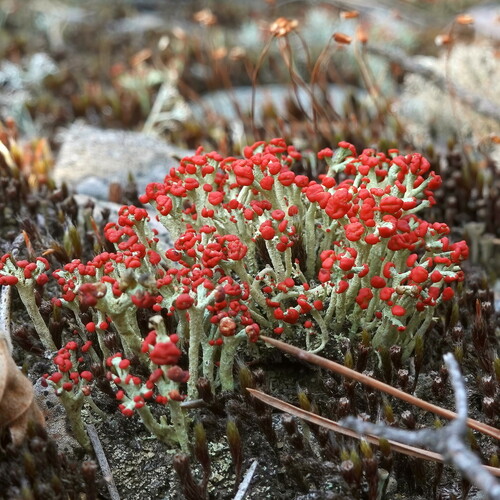
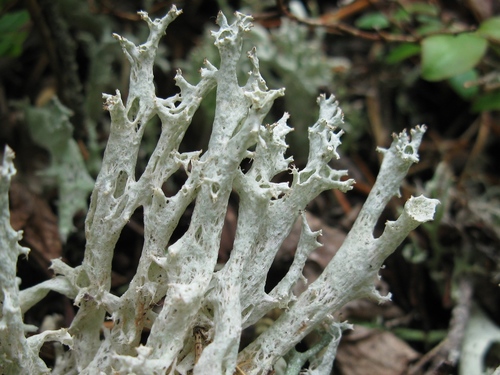
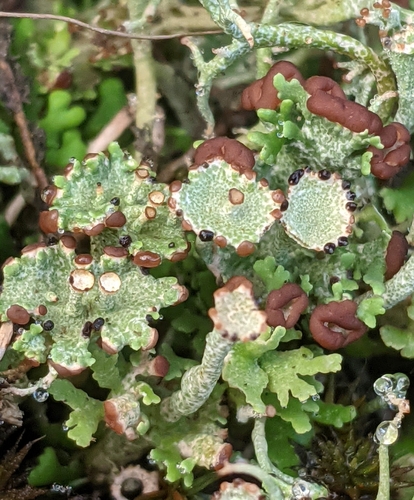
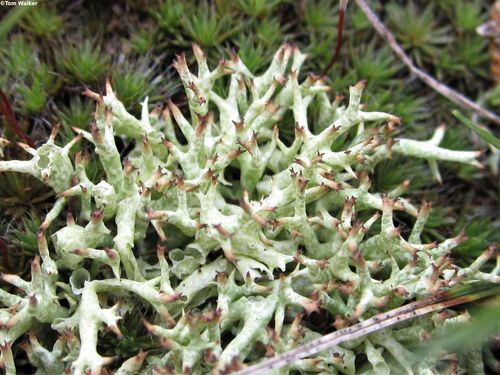
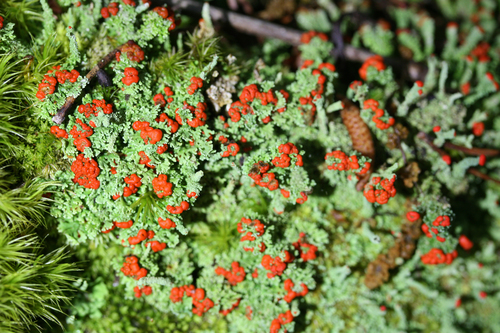
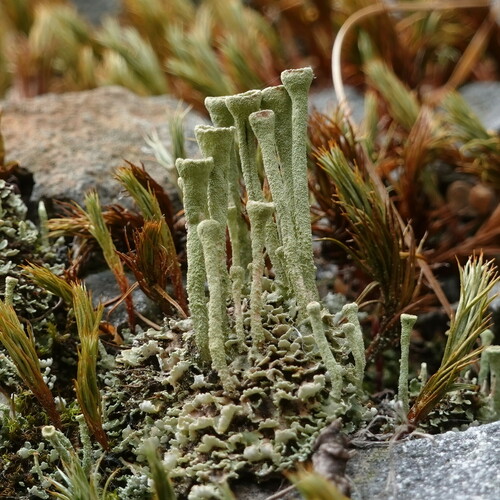
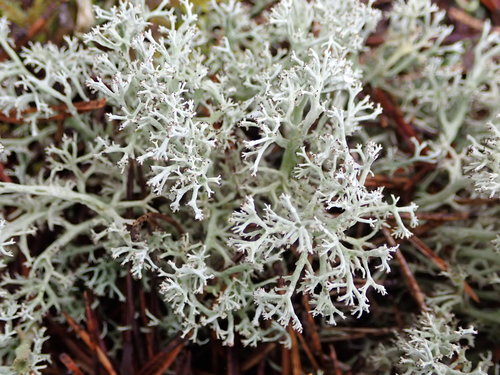
This lichen is made up of two distinct thalli. An initial primary squamulose thallus grows across bark in a scaly, flaking pattern, and is followed by a secondary fruticose thallus called a podetium. The cup-shaped podetia reach 4–10 cm tall, and bear terminal ascocarps contained within apothecial structures. The coloring of Cladonia arbuscula varies between subspecies, but is most commonly white-gray, pale yellow, or bright green, with darker orange tips at the sites where ascocarps form. The thallus tests negative in standard K-tests, with no resulting color change. C. arbuscula is distributed across the globe, and tolerates harsh conditions that most other plants cannot. It is widespread across Canada and the northern United States, mostly in Alaska, and also occurs in Wyoming, Idaho, and Montana. While it is relatively uncommon in the Pacific Northwest, it can still be found there. It is common in Labrador and Newfoundland, and occurs throughout England and Ireland. It has also been recorded at more southern latitudes, including in Chile, Tasmania, and New Zealand, but it is most dominant in northern latitudes. Overall, the species is considered conservation secure, though some subspecies have experienced local declines that are a cause for concern. C. arbuscula grows in areas of high climatic stress where most vascular plants cannot survive. It is most commonly found growing on white or black spruce, but can also grow on the ground in bogs or fens, and on sun-exposed rocks. Reindeer lichens like this species require a small amount of soil to stay attached to their substrate, and rarely grow directly on soil, thanks to their ability to absorb water and nutrients directly from the air. Other substrates C. arbuscula can grow on include decaying organic material, raised peat, other coniferous or hardwood trees, and lakeshore rocks. The species sometimes grows in association with mosses, which is thought to help it attach to rocks or woody debris. It is shade intolerant, and generally cannot grow in areas with 70% canopy cover or higher. Except for Pacific Northwest populations, reindeer lichens grow primarily in cool, dry sites, and avoid areas with standing water; in high-moisture regions, they only grow in the driest available microbiomes. Compared to other species in its genus, C. arbuscula is found more often in moist areas, but still prefers dry, cool habitats for ideal growth. Reindeer lichens are rarely found at high elevations, and grow mostly at low to middle elevations. C. arbuscula can reproduce both asexually and sexually. Asexual reproduction can occur through fragmentation of the primary thallus: a small portion of the thallus can regenerate into a full, functional new thallus as long as the fragment contains both algal and fungal cells. Asexual spores called conidia are produced on pycnidia that form at the edges of podetia cups, and these spores support asexual reproduction via fragmentation. Because these asexual reproductive structures are microscopic, few studies have detailed the full reproduction process of C. arbuscula. Sexual reproduction in C. arbuscula happens through the production and release of ascospores. These sexual spores are held in an ascus located at the tip of the podetia, and are dispersed by wind. However, this lichen does not typically disperse far from the parent organism: the average dispersal distance is only around 8 to 10 inches in forest sites, and no more than 30 inches in prairies and savannas. Lichen fragments can be carried longer distances by animals, but this is not the main method of reproduction and regeneration. Lichens can reproduce sexually via either heterothally or homothally, but the obligate lifestyle of Cladonia species makes studying their sexual reproductive cycles nearly impossible in a laboratory setting, so the sexual strategy of this species remains unknown. Cladonia arbuscula is a known host for the fungus Lichenopeltella cladoniarum. In terms of fire ecology, thallus fragments can move from unburned areas to freshly burned sites, and easily colonize the shadeless, dry terrain of recently burned areas. In recently burned areas, C. arbuscula growth rates increase substantially compared to growth in unburned areas. While reindeer lichens can persist without fire, the reduced canopy cover and increased ground-layer biodiversity that follow frequent fires create significantly better growing conditions for these lichens. Fire itself kills reindeer lichen, but creates more favorable growth conditions after the burn. C. arbuscula is typically found in late primary successional stages, and in early to middle secondary successional stages. Caribou grazing and trampling can affect local lichen diversity by allowing early and late successional stage species to grow at the same time in the same area.