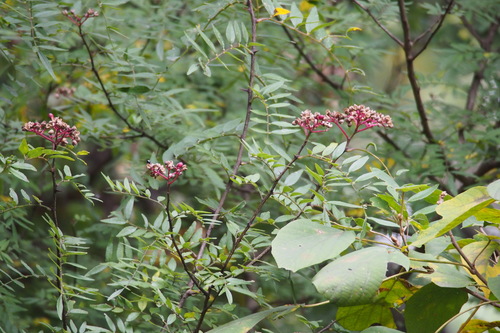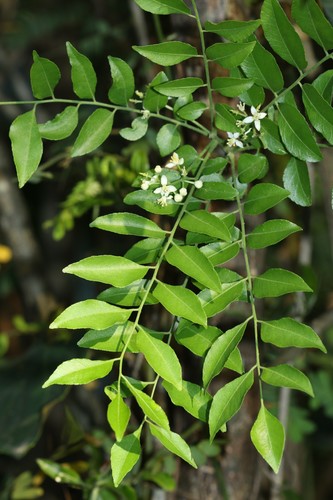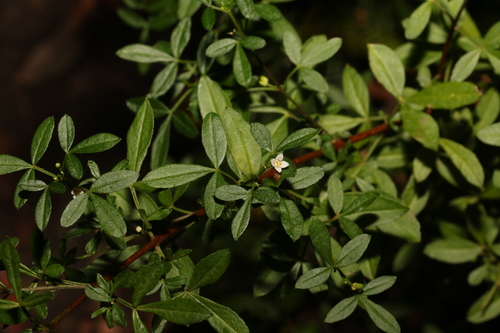
About Citrus trifoliata L.
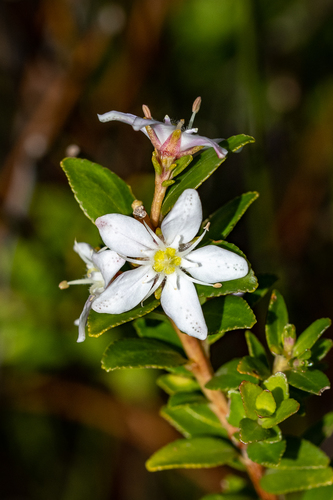
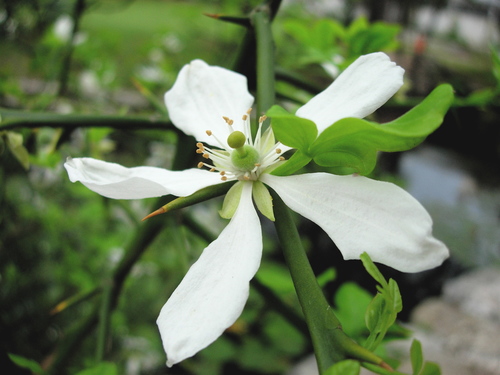
Citrus trifoliata L., commonly called trifoliate orange, can be identified by large 3–5 cm (1.2–2.0 in) thorns on its shoots. It has deciduous leaves made up of three (or rarely, five) leaflets: the middle leaflet is typically 3–5 cm (1.2–2.0 in) long, while the two side leaflets are 2–3 cm (0.79–1.18 in) long. Its flowers are white with pink stamens, measure 3–5 cm (1.2–2.0 in) in diameter, and are larger than the flowers of true citrus. They otherwise closely resemble true citrus flowers, apart from a much less noticeable scent. Like true citrus, crushed trifoliate orange leaves release a spicy smell. The fruits start green and ripen to yellow, reaching 3–4 cm (1.2–1.6 in) in diameter — a size similar to a lime, with an appearance like a small orange. The fruit surface is finely downy, with a fuzzy texture matching that of a peach. Trifoliate orange fruits have a distinct smell compared to other citrus varieties, and they often contain a high concentration of seeds. The cultivar 'Flying Dragon' is a dwarf variety with highly twisted, contorted stems and even stronger thorns than the standard species. Its dense growth and strong curved thorns make it an excellent barrier hedge. Hedges of this cultivar have been grown for over 50 years at Oklahoma State University in Stillwater, where they are highly resistant to student disturbance. This plant is also highly deer-resistant. Mature specimens of trifoliate orange can be seen growing in the gardens of St Paul's Cathedral in central London. Trifoliate orange and its various hybrids with other Citrus species are widely used as citrus rootstock, valued for their resistance to cold, the tristeza virus, and the oomycete Phytophthora parasitica, which causes root rot. Recent studies have found that trifoliate orange contains a high concentration of auraptene, a functional component that provides immunity against citrus tristeza virus (CTV). Fresh trifoliate orange fruits are very bitter, partly due to their poncirin content, and most people consider them inedible raw. They can however be processed into marmalade. When dried and ground into powder, they can be used as a condiment. In East Asian medical traditions, trifoliate orange fruits are widely used to treat allergic inflammation. The species has also been planted as a security barrier, thanks to its quick, dense growth and sharp thorns.