About Citrus medica L.
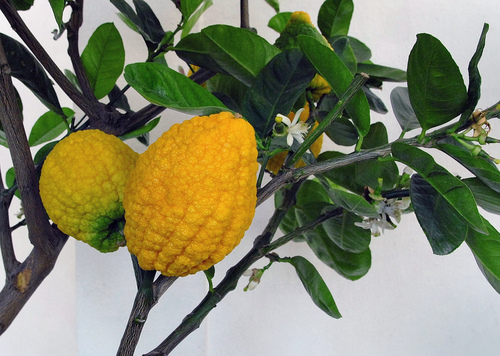
Citrus medica L., commonly known as citron, is a large fragrant citrus fruit with a thick, coarse rind. It resembles a lemon but is larger in size. It is one of the original ancestral citrus species, from which all other citrus types developed through natural hybrid speciation or artificial hybridization. While citron cultivars grow into a wide variety of physical shapes, all are closely related genetically. Citron is used in Asian and Mediterranean cuisine, traditional medicine, perfume production, and religious rituals and offerings. Hybrids produced from crosses between citrons and other citrus are far more commercially prominent than citron itself; most notably, lemons and many limes were developed using citron as a parent. The citron is an ancient original citrus species. Molecular evidence shows that most cultivated citrus species originated from hybridization of a small set of ancestral types: citron, pomelo, and mandarin, with papedas and kumquat contributing less to this process. Citron is typically self-pollinated, which leads to it having a high degree of genetic homozygosity. It almost always acts as the male parent, rather than the female parent, when forming citrus hybrids. Archaeological evidence for ancient citrus fruits is limited, as neither seeds nor pollen are routinely recovered from archaeological sites. Citron is thought to be native to the southeast foothills of the Himalayas. Despite its scientific name, which comes from the classical Greek term "Median pome", the fruit was not originally native to Media (ancient Media). It was mainly cultivated on the shores of the Caspian Sea, north of Mazandaran and Gilan, before it moved on to the Mediterranean basin, where it was cultivated across different areas in later centuries, as documented by Erich Isaac. Many sources note that Alexander the Great and his armies, during their campaigns in Iran and what is now Pakistan, were responsible for spreading citron westward, reaching European countries including Greece and Italy. From ancient through medieval times, citron was mainly used for purported medical purposes to treat seasickness, scurvy, and other disorders. In Pietro Andrea Mattioli's 1544 Commentaries, he recommended using citron essential oil to preserve dead bodies and suggested it could be used as a contraceptive. Citron and its bioactive phytochemicals have shown activity against various pathogenic microorganisms. Citron juice contains high amounts of vitamin C, and the dietary fiber pectin can be extracted from the fruit's thick albedo.