About Citrullus lanatus (Thunb.) Matsum. & Nakai
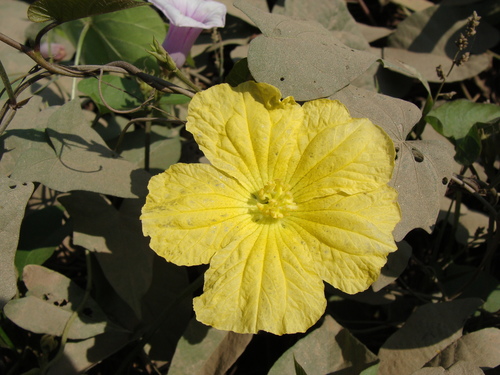
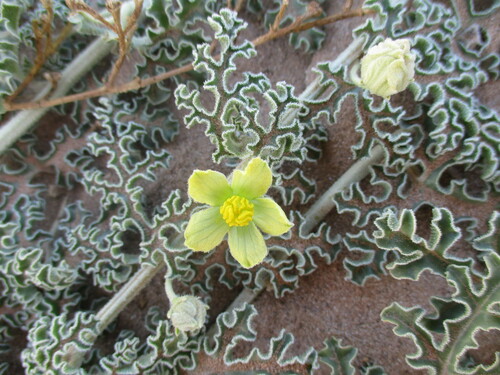
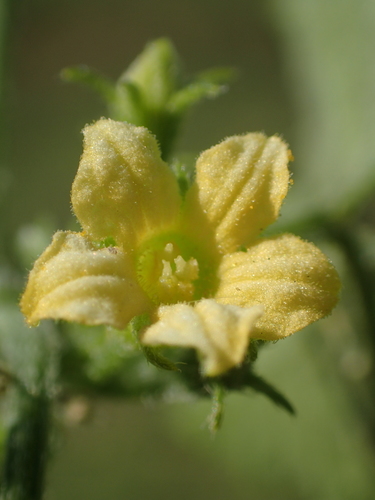
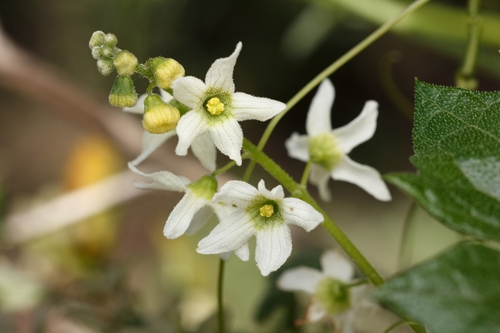
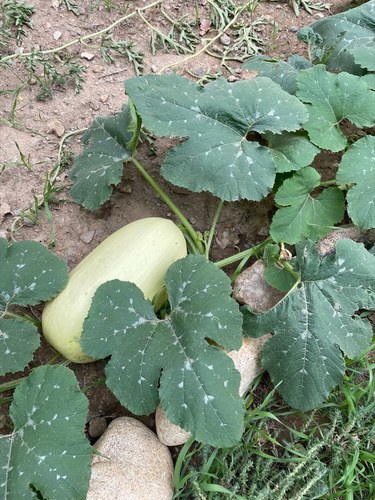
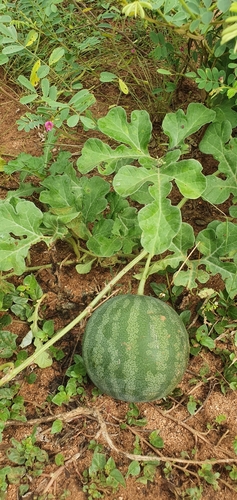
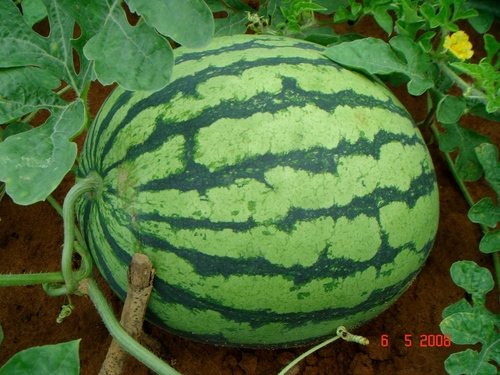
Watermelon, scientifically named Citrullus lanatus (Thunb.) Matsum. & Nakai, is an annual plant with a prostrate or climbing growth habit. Its stems can reach up to 3 metres (10 feet) in length, and new growth bears yellow or brown hairs. The leaves measure 60 to 200 millimetres (2+1⁄4 to 7+3⁄4 inches) long and 40 to 150 millimetres (1+1⁄2 to 6 inches) wide; they most often have three main lobes that are themselves lobed or doubly lobed. Young watermelon plants have dense, woolly yellowish-brown hairs that disappear as the plant matures. Like all but one species in the genus Citrullus, watermelon produces branching tendrils. Watermelon plants bear unisexual flowers, which are either male or female, colored white or yellow, and carried on 40-millimetre-long (1+1⁄2 inch) hairy stalks. Each flower grows individually in a leaf axil, and the species is monoecious: each individual plant produces both male and female flowers. Male flowers are more common early in the growing season, while female flowers develop later and have inferior ovaries, with their styles united into a single column. The large edible fruit of watermelon is a modified berry called a pepo, with a thick outer rind (exocarp) and a fleshy center (composed of mesocarp and endocarp). Fruits on wild watermelon plants reach up to 20 cm (8 in) in diameter, while fruits on cultivated varieties may exceed 60 cm (24 in). The fruit rind ranges from mid- to dark green and is usually mottled or striped. The inner flesh, which holds numerous seeds throughout, is most commonly red or pink, but can also be orange, yellow, green or white. A related bitter species, Citrullus amarus, has become naturalized in semiarid regions of several continents, and is classified as a pest plant in parts of Western Australia, where it is called pig melon. Watermelons are cultivated in tropical to temperate climates, and require temperatures above 25 °C (77 °F) to grow well. For small-scale garden cultivation, seeds are typically sown in pots under protected cover, then transplanted into open ground. The ideal growing medium is well-drained sandy loam with a soil pH between 5.7 and 7.2. Common major pests of watermelon include aphids, fruit flies, and root-knot nematodes. In high humidity conditions, watermelons are susceptible to plant diseases including powdery mildew and mosaic virus. Some varieties grown commonly in Japan and other parts of the Far East are susceptible to fusarium wilt; grafting these varieties onto disease-resistant rootstocks provides protection against this disease. For commercial cultivation of conventional, seeded watermelon varieties, the United States Department of Agriculture recommends placing at least one beehive per acre (approximately 4,000 square meters per hive) for pollination. Seedless watermelon hybrids produce sterile pollen, so growers must plant pollinizer rows of varieties that produce viable pollen alongside the seedless hybrids. Because the supply of viable pollen is lower and pollination is far more critical for producing seedless watermelons, the recommended number of beehives per acre increases to three hives (approximately 1,300 square meters per hive). Watermelons have a longer growing period than other melons, and often require 85 days or more from transplanting for the fruit to reach maturity. Insufficient pollen is thought to cause the disorder known as hollow heart, which makes the watermelon flesh develop a large, sometimes intricately symmetric hole. Watermelons with hollow heart are still safe to eat. In South Africa, the Kalahari Desert, and East Africa, watermelons serve as an important source of water for both humans and animals.