About Citrullus ecirrhosus Cogn.
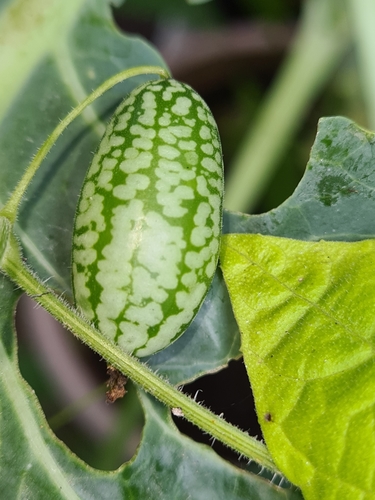
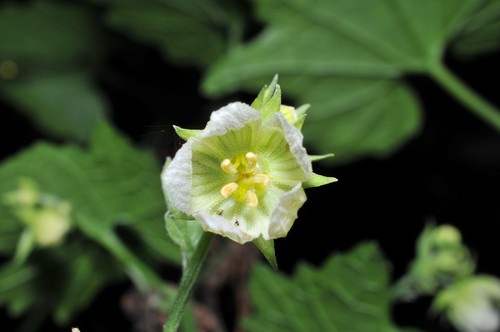
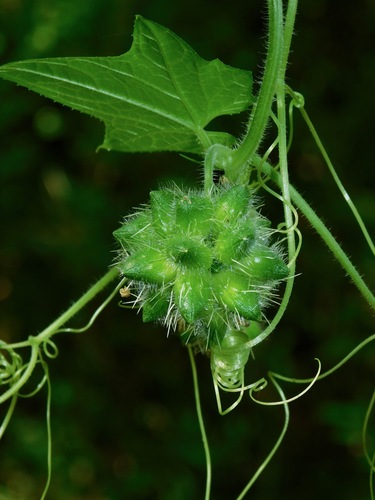
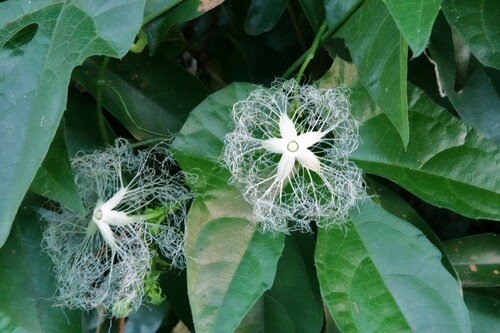
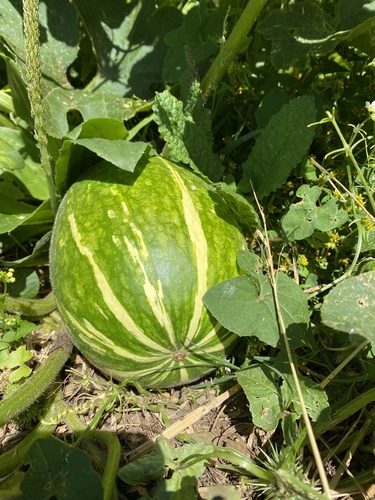
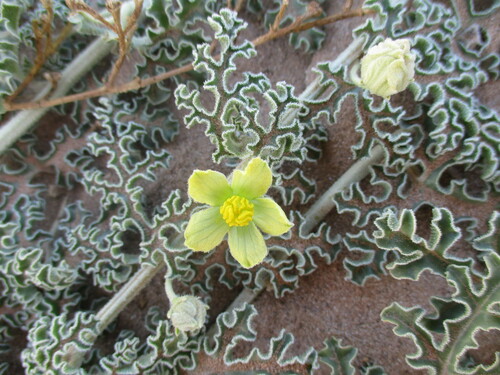
Citrullus ecirrhosus Cogn., commonly known as Namib tsamma, is a species of perennial desert vine in the gourd family, Cucurbitaceae. It is a relative of the widely consumed watermelon (Citrullus lanatus), and is the sister species of bitter melon Citrullus amarus. It shares hard, white, bitter flesh with C. amarus. This species can be found in Namibia and the Cape Provinces of South Africa, most notably in the Namib Desert. Its overall distribution is limited in South Africa, with a range extending from the Richtersveld up to the western Namib in Namibia. It grows in Succulent Karoo habitat, specifically in dry watercourses. Its vines can crawl up to two metres long, and it produces yellow flowers. As a hardy desert plant, it can survive with little water and strong sunlight. Its leaves grow on annual stems that die back each year. The plant relies on deep groundwater and morning fogs for moisture. Its bitter-tasting fruits are called tsamma melons, and the plant is an important source of water for many desert animals.
In 2019, researchers Simmons, Jarret, Cantrell, and Amnon conducted experiments that hybridized Citrullus ecirrhosus with Citrullus lanatus. This hybridization produced a cultivated watermelon with increased resistance to the pest Bemisia tabaci, the whitefly. The hybrid retained the desired traits of cultivated C. lanatus while gaining whitefly resistance. While the hybrid does not have complete resistance to whiteflies, it is still better protected than standard cultivated watermelons.