About Cirsium arvense (L.) Scop.
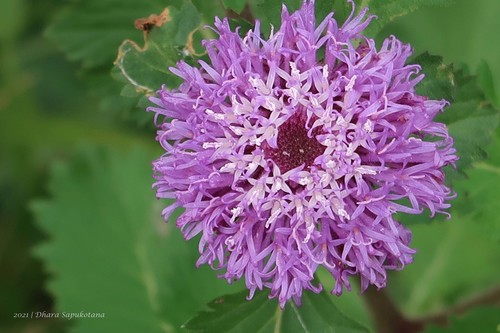
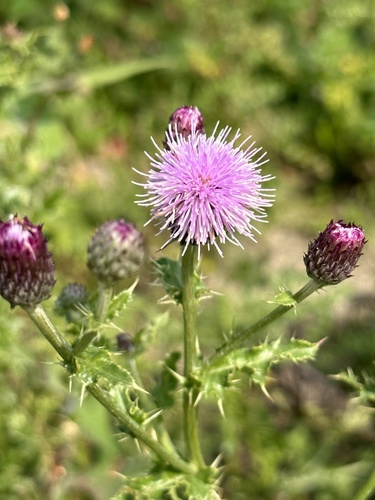
Cirsium arvense (common name creeping thistle) is a C3 carbon fixation plant. C3 plants, which originated in the Mesozoic and Paleozoic eras, generally thrive in areas with moderate sunlight intensity, moderate temperatures, and plentiful groundwater. C3 plants lose 97% of the water they take up through their roots via transpiration. This is an herbaceous perennial plant that grows up to 150 cm tall. It forms extensive clonal colonies from thickened roots that produce numerous erect shoots each growing season, and it is classified as a ruderal species. Due to its high adaptability, Cirsium arvense is counted among the worst invasive weeds worldwide. Genetic expression comparisons show the plant evolves differently based on where it becomes established, with observable differences in R-protein-mediated defenses, sensitivity to abiotic stresses, and developmental timing. In its ecology, the seeds of Cirsium arvense are an important food source for goldfinches and linnets, and are used less frequently as food by other finches. The foliage of creeping thistle is eaten by over 20 species of Lepidoptera, including the painted lady butterfly and the engrailed moth, as well as by several species of aphids. Cirsium arvense is also documented as a food source for the beetle Altica cirsicola. A wide variety of insects including bees, moths, wasps, and beetles visit the plant's flowers, giving it a generalised pollination syndrome. It is beneficial to nectar-reliant pollinators. A 2016 study conducted in Britain found it to be a top producer of nectar sugar, ranking second in nectar sugar production per floral unit at 2609±239 μg. As for uses, like other species in the Cirsium genus, the roots of Cirsium arvense are edible, though they are rarely eaten. This low usage is at least partly due to the root's tendency to cause flatulence in some people. The taproot is considered the most nutritious part of the plant. The leaves are also edible, but their spines make preparing them for food too tedious to be practical. Stalks are edible and are much easier to remove spines from. Bruichladdich distillery on the Isle of Islay includes creeping thistle as one of the 22 botanical forages used to make its gin, The Botanist. The Cherokee people use the feathery pappus of this plant to fletch blowgun darts.