About Circus spilonotus Kaup, 1847
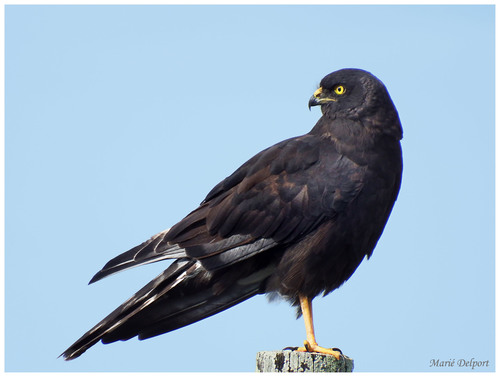
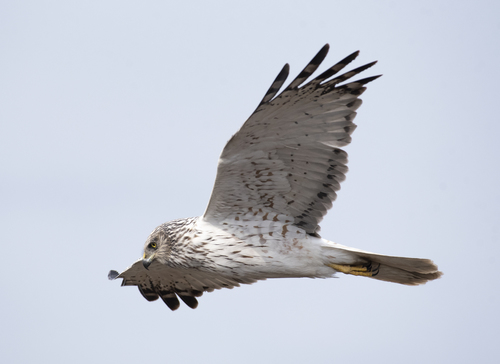
This species measures 48 to 58 cm in length, with a wingspan ranging from 113 to 137 cm. Like most birds of prey, the female is typically larger than the male. Male plumage is variable. In its typical form, the head, breast, back, and wing-coverts are blackish with pale streaks. The remaining portions of the wings are grey, with black wingtips and a white front edge. The tail is grey, the rump is white, and the underparts are mostly white. Females are dark brown, with buff streaking on the head and underparts. The rump is often whitish, and the tail has dark bars. Young individuals are dark brown, with buff coloration on the head and a pale patch on the underwing. This species is usually silent, but produces a mewing call that is most often given at roost sites. With the exception of the sedentary Papuan harrier, eastern marsh harriers are generally migratory. Their breeding range covers northeast China, Mongolia, and southeast Siberia, extending west to Lake Baikal, with small populations found in northern Japan, specifically Hokkaidō and northern Honshū. There is some range overlap with the western marsh harrier around Lake Baikal, and interbreeding between the two has been recorded. Their wintering range includes southern China, Taiwan, Korea, southern Japan, northeast India, Bangladesh, and Southeast Asia as far south as the Philippines, Borneo, and Sumatra. Large numbers of these birds migrate along the Chinese coast, with thousands passing through sites such as Beidaihe during autumn. Their preferred habitat is open country, including marshland, paddy fields, and grassland. When hunting, this species flies low over the ground, with its wings held in a shallow V-shape. Its prey consists of small mammals, birds, and frogs. The breeding season starts in April. Nests are constructed from sticks and built on the ground, most commonly in reedbeds. Clutches contain four to seven eggs, which are incubated for 33 to 48 days. Juveniles fledge 35 to 40 days after hatching.