About Circus assimilis Jardine & Selby, 1828
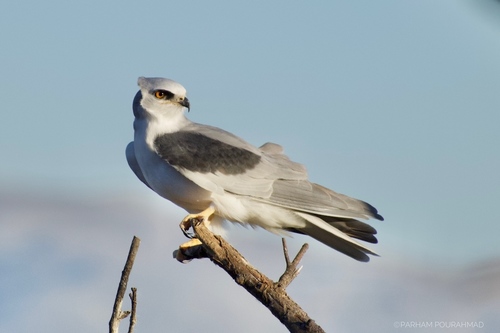
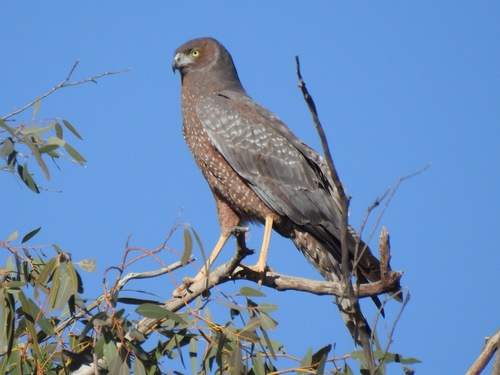
Circus assimilis, commonly called the spotted harrier, is a medium-sized, slender bird of prey that shows clear size differences between adult males and females. Adult females grow to 58–61 cm, while adult males are much smaller, reaching only 50–55 cm. Both adult and juvenile spotted harriers have an owl-like facial ruff that gives them a short, broad head, as well as long yellow legs. Their wings have prominent black tips, and their tail is distinctly barred and slightly wedge-shaped. Adult birds have blue to grey upperparts, a chestnut face, and underparts marked with numerous white spots. First-year juvenile spotted harriers are mostly dark brown with buff upperparts, and have pale buff underparts with brown streaks across the chest and stomach. In their second year, spotted harriers gain almost full adult colouration, but have white streaks on their underparts instead of the distinct spots seen on fully mature adults. The spotted harrier is native to Australia and Indonesia, and vagrant individuals have been recorded in Timor-Leste. Its total geographic range is more than 20,000 km², according to Birdlife International (2012). It can be found across most of mainland Australia, but is absent from densely forested or wooded habitats of the coast, escarpments, and mountain ranges, and only rarely occurs in Tasmania. In New South Wales, individuals are widely dispersed and form a single population. This terrestrial bird lives in open habitats including open grasslands, open woodland (such as acacia and mallee woodland), inland riparian woodland, grassland, and shrubland. It is most commonly found in native grassland, but also forages in agricultural land and inland wetlands.