About Cinnamomum burmanni (Nees & T.Nees) Blume
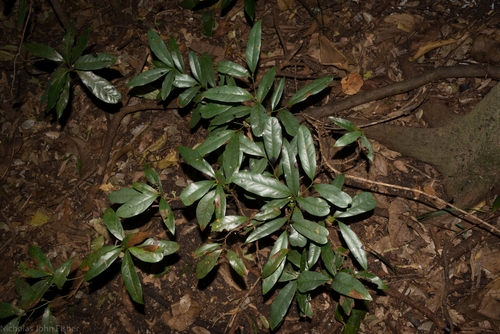
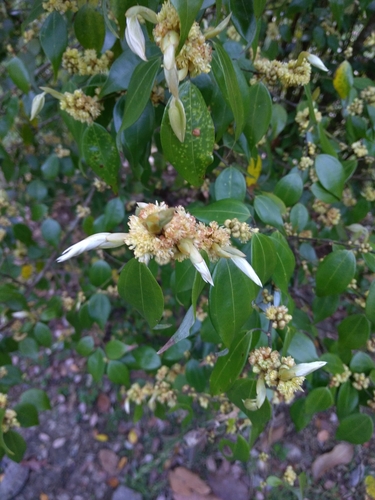
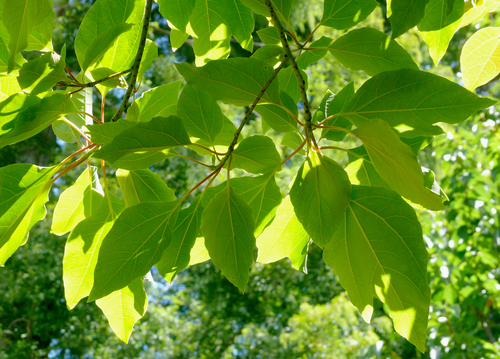
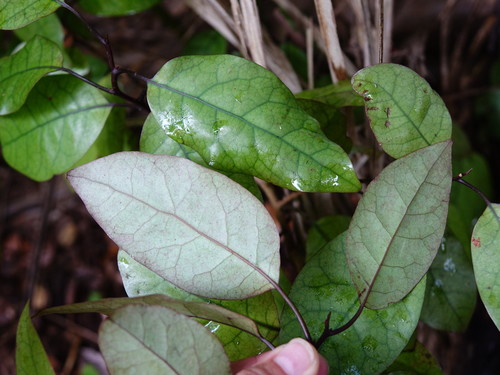
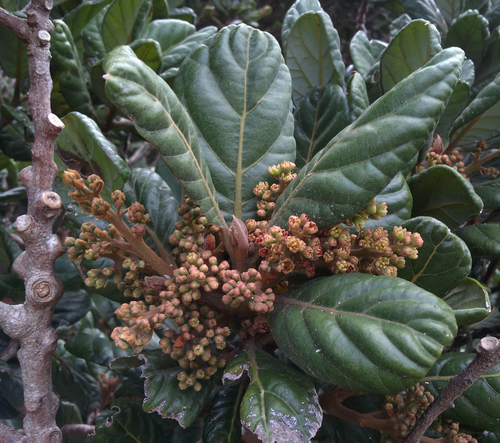
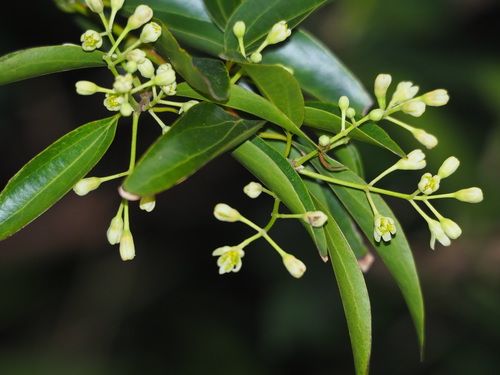
Cinnamomum burmanni (Nees & T.Nees) Blume is an evergreen tree that grows up to 7 m (23 ft) tall. It has aromatic bark and smooth, angular branches. Its leaves are glossy green, oval-shaped, and measure approximately 10 cm (3.9 in) long by 3–4 cm (1.2–1.6 in) wide. Small yellow flowers bloom in early summer, which develop into a dark drupe fruit. This species is native to tropical Southeast Asia, with a range extending from Bangladesh to Myanmar, southern China, Hainan, Vietnam, Indonesia (including Borneo, Sumatra, Java, Sulawesi, and the Lesser Sunda Islands), and the Philippines. It has been invasive in Taiwan since approximately the 1970s. In Sumatra, Cinnamomum burmanni is commonly found in West Sumatra and western Jambi province; the Kerinci region is particularly well known as a production center for high-quality crops with high essential oil content. On Borneo, it occurs in the Keningau, Lahad Datu, Ranau, Sandakan, and Sipitang districts of Sabah, as well as in Kalimantan, where it grows in cultivation, secondary forest, villages, and abandoned plantations up to 1,500 meters in elevation. It is an introduced species in parts of the subtropical world, most notably Hawaiʻi, where it has become naturalized and invasive. It was brought to Hawaiʻi from Asia in 1934 to be grown as a crop plant. Aromatic oil can be extracted from the bark, leaves, and roots of Cinnamomum burmanni. Its bark is used as cinnamon bark. Its leaves can be used as a spice for preserved food and canned meat as a replacement for laurel leaves. The plant's core contains fat that can be pressed for industrial use. Its wood is used to make fine furniture and for other fine woodworking materials. Cinnamomum burmanni is also used as a Chinese herbal medicine. The most common and cheapest type of cinnamon sold in the United States is made from powdered Cinnamomum burmanni. Unlike Cinnamomum cassia and Ceylon cinnamon, Cinnamomum burmanni oil contains no eugenol, and has higher amounts of coumarin; an authenticated sample tested contained 2.1 g/kg of coumarin, while 8 tested samples had a mean coumarin content of 5.0 g/kg. It is also sold as single-layer quills.