About Cinclodes oustaleti Scott, 1900
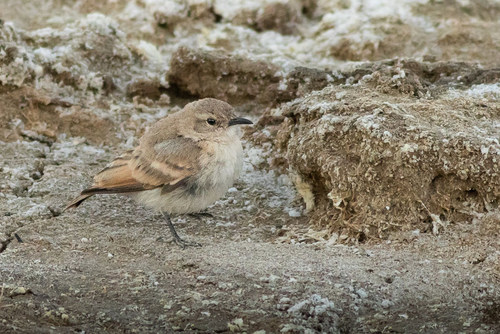
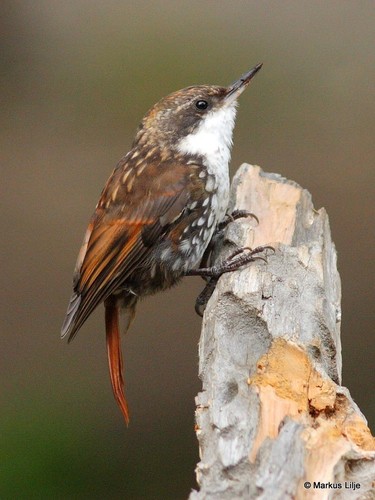
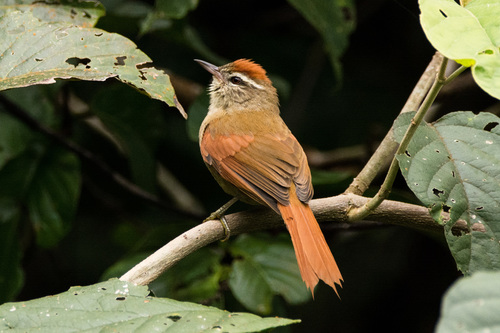
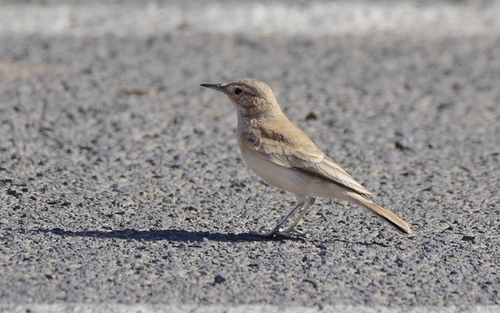
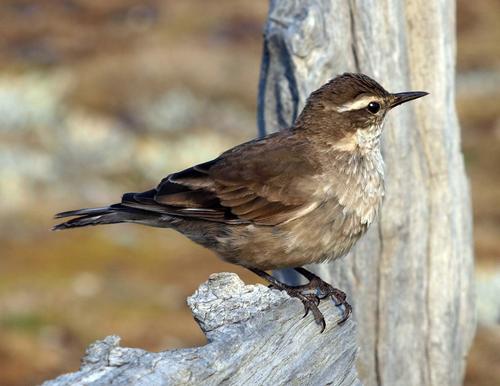
The grey-flanked cinclodes (Cinclodes oustaleti Scott, 1900) measures 17 to 18 cm (6.7 to 7.1 in) in length and weighs 22 to 31 g (0.78 to 1.1 oz). It is a small cinclodes with a medium-length, slightly decurved bill. The sexes share identical plumage. Adults of the nominate subspecies have a speckled buff supercilium at the front, blackish brown lores and ear coverts, and a whitish malar area marked with dark scallops. Their crown is dark grayish brown, and their upperparts are rich dark brown. Their wings are also rich dark brown, with a whitish bend, tawny-rufous and blackish brown primary coverts, and a patch of rufous across the base of the flight feathers. Their tail is blackish brown, with dull rufous tips on the outer feathers. Their throat is white with dark scallops at its base; their breast is dull dark gray-brown, with pale spots on the upper breast that become streaks on the lower breast. Their belly is paler and browner than the breast, with a white center, and their flanks and undertail coverts are rich dark brown with some whitish feather tips. Their iris is dark brown to black, their bill is blackish or blackish horn, and their legs and feet are blackish brown. Subspecies C. o. hornensis is less intensely colored than the nominate, with darker gray upperparts and grayer, less brown underparts. C. o. baeckstroemii matches the nominate subspecies, but has an added rufous tinge on the sides, flanks, and undertail coverts. The nominate subspecies of the grey-flanked cinclodes occurs on mainland South America: it ranges from Chile's Antofagasta Region and western Argentina's Mendoza Province south to the Strait of Magellan in both countries. Subspecies C. o. hornensis is found on Chile's Desolación Island, the Chilean and Argentine portions of Tierra del Fuego, and the Cape Horn Archipelago. C. o. baeckstroemii occurs only on Alejandro Selkirk Island, which is part of Chile's Juan Fernández Archipelago. The grey-flanked cinclodes lives in open grassy and rocky landscapes, and is often found near streams in mountain areas. Its elevational range extends from sea level up to 4,200 m (13,800 ft).