About Cinclodes excelsior P.L.Sclater, 1860
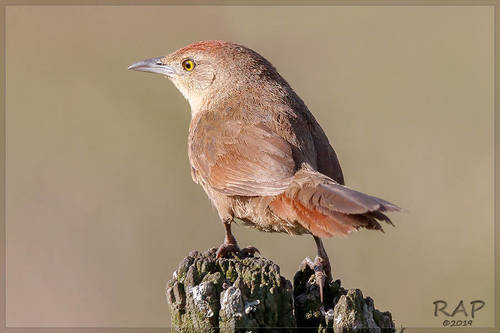
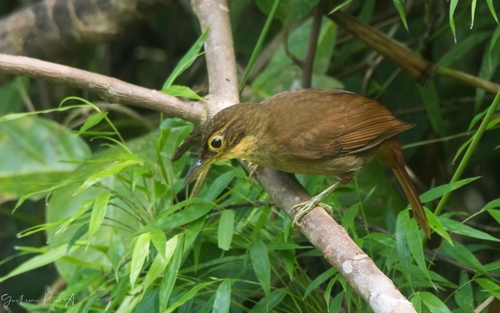
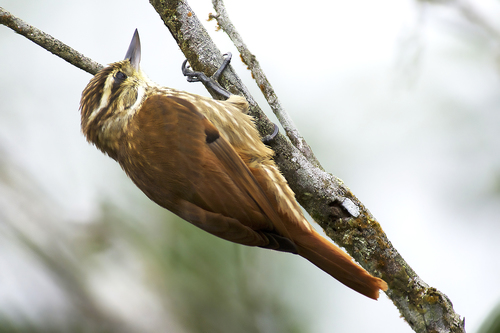
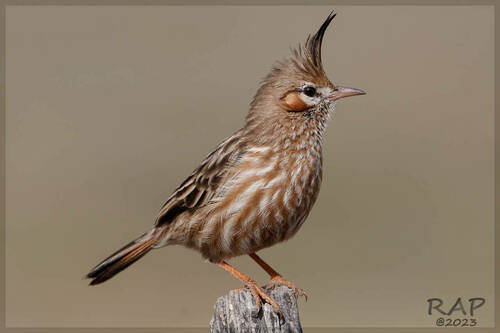
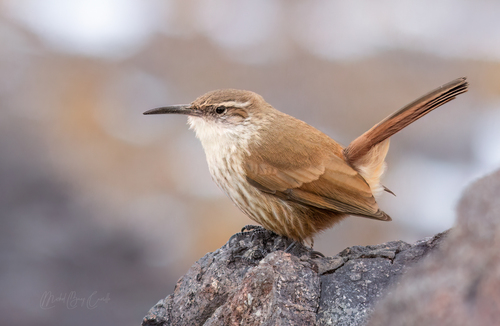
The stout-billed cinclodes (Cinclodes excelsior P.L.Sclater, 1860) measures 20 to 21 cm (7.9 to 8.3 in) in length and weighs 62 to 66 g (2.2 to 2.3 oz). It is a large cinclodes with a decurved bill that is thick at the base. The sexes have identical plumage. Adults of the nominate subspecies have a long white supercilium that extends to the hindneck, a whitish malar area marked with dark scallops, and an otherwise dark brown face with some narrow pale streaks. Their crown is very dark brown, and their upperparts are dark brown. Their wings are also dark brown, with blackish brown primary coverts and a patch of rufous across the base of the flight feathers. Their tail is dark brown, with increasing amounts of dull rufous from the innermost to the outermost feathers. Their throat is whitish with faint scallops; their upper breast is light brown with indistinct paler scallops; and their lower breast and undertail coverts are brownish with faint paler streaks. Their belly is pale grayish brown, and their flanks are brown with pale streaks. Their iris is brown to dark brown, their bill is black, and their legs and feet are brownish gray to blackish. Juveniles resemble adults but have more mottling on the breast. Compared to the nominate subspecies, the subspecies C. e. columbianus has slightly darker upperparts, paler underparts, and a more distinct rufous wingband. The stout-billed cinclodes has a disjunct distribution across the northern Andes. Of the two recognized subspecies, C. e. columbianus is the more northerly, found in Tolima Department in Colombia's Central Andes. The nominate subspecies occurs in the Andes from Nariño Department in extreme southwestern Colombia, south through Ecuador as far as Azuay Province. This species inhabits a variety of landscapes, including rocky páramo grasslands, semi-humid to humid montane scrublands, and sometimes Polylepis groves and more barren areas with scattered shrubs. It favors areas near water and boggy meadows. It mostly occurs at elevations between 3,200 and 4,500 m (10,500 and 14,800 ft), but can be found as high as the snowline at 5,200 m (17,100 ft).