About Cicuta virosa L.
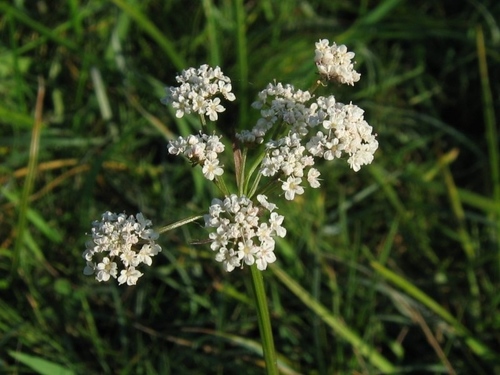
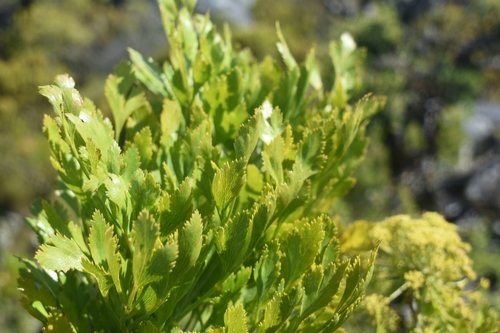
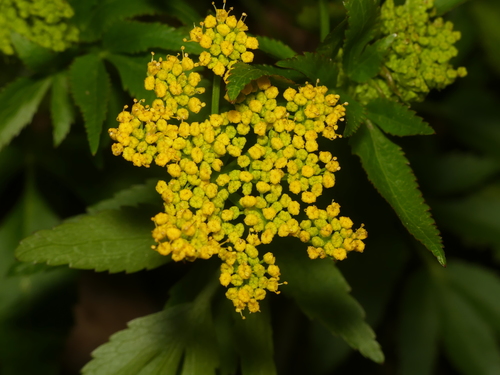
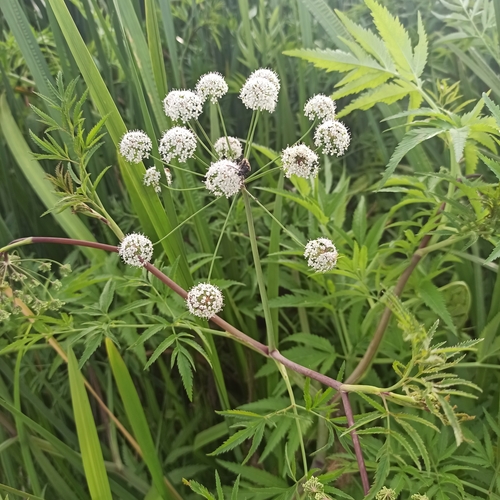
Cicuta virosa L. is a perennial herb that reaches 1 to 2 meters in height. Its stems are smooth, branching, swollen at the base, marked with purple stripes, and hollow except for partitions at the points where leaves connect to the stem. In cross-section, one side of the stem is flat, while all other sides are rounded. Its leaves are arranged alternately, are tripinnate, and only have coarse teeth. This differs from the fern-like, lacy leaves seen in many other members of the Apiaceae (carrot) family. The plant produces small white flowers clustered into umbrella-shaped inflorescences, a trait that is typical for the family. The many-flowered small umbel clusters have unequal stalks, which measure 5 to 11 centimeters long when the plant is fruiting. An oily yellow liquid oozes out of cuts made to the stems and roots; this liquid has a strong unpleasant smell similar to that of parsnips or carrots. The plant is often mistaken for parsnip because of its clusters of white tuberous roots. It grows in wet meadows, alongside streambanks, and in other wet, marshy areas. This plant contains the toxin cicutoxin, which disrupts the function of the central nervous system. When ingested by humans, cicutoxin causes symptoms of nausea, vomiting, and abdominal pain that typically appear within 60 minutes. Poisoning can progress to tremors and seizures. The root has the highest concentration of cicutoxin, and even a single bite of the root can be enough to cause death. In animals, the toxic dose and the lethal dose are almost identical. One gram of this water hemlock per kilogram of body weight will kill a sheep, and 230 grams is enough to kill a horse. Because symptoms develop very rapidly after ingestion, treatment for poisoning is usually unsuccessful.