About Cicuta maculata L.
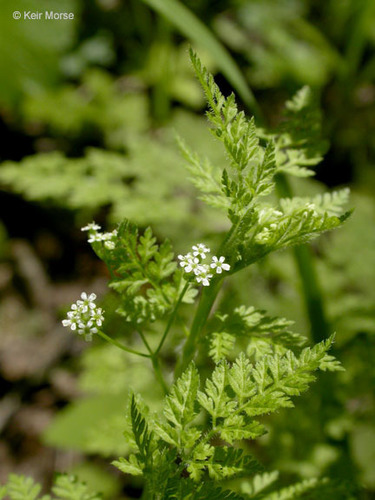
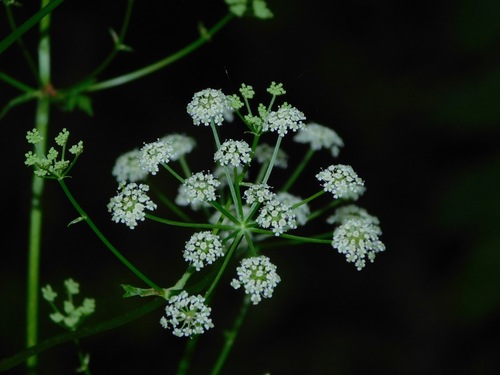
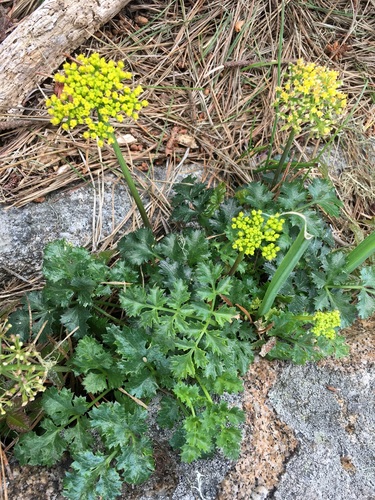
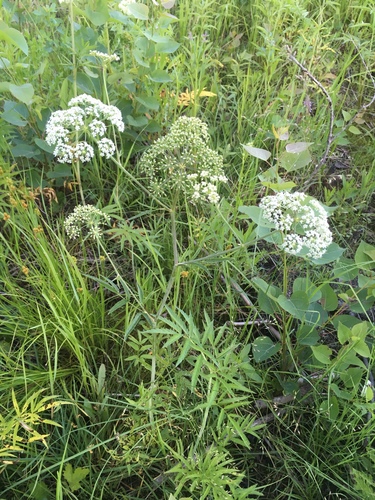
Cicuta maculata is a rhizomatous perennial herb with a hollow, erect stem that can grow up to 1.8 meters (6 feet) tall. Its long leaves are composed of multiple lance-shaped, pointed, serrated leaflets. Each shiny green leaflet measures 2 to 10 centimeters (1 to 4 inches) long, and the entire leaf may reach up to 40 centimeters (16 inches) in length. Its inflorescence of white flowers, which looks similar to the flower clusters of other species in the carrot family, is a compound umbel made up of many small flower clusters. The plant produces dry tan-brown fruit that is only a few millimeters long.
This plant prefers wet habitats, including wet meadows, roadside ditches, pond margins, open marshes, and freshwater swamps, and it flowers from May to September. It has clusters of white tuberous roots, which leads it to be occasionally mistaken for parsnips. This highly poisonous species is recognized as the most toxic native plant in North America. Any ingestion of Cicuta maculata is fatal, causing violent, painful convulsions. Over centuries, many people have died from water hemlock poisoning, but livestock have historically been the most impacted; this is why the plant is sometimes called cowbane, and ingestion can kill livestock in as little as 15 minutes.
The primary toxic compound in Cicuta maculata is cicutoxin, an unsaturated aliphatic alcohol that is most concentrated in the plant's roots. When consumed by humans, symptoms including nausea, vomiting, and tremors develop within 30 to 60 minutes, followed by severe cramps, projectile vomiting, and convulsions. Retrograde amnesia is a documented occasional long-term effect. Ingestion of any amount of this water hemlock can cause death or permanent damage to the central nervous system.