About Chrysoteuchia culmella Linnaeus, 1758
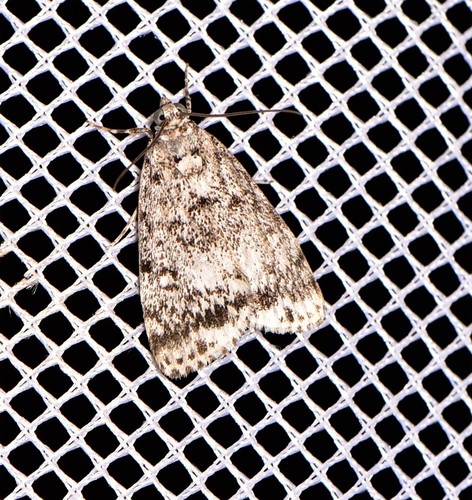
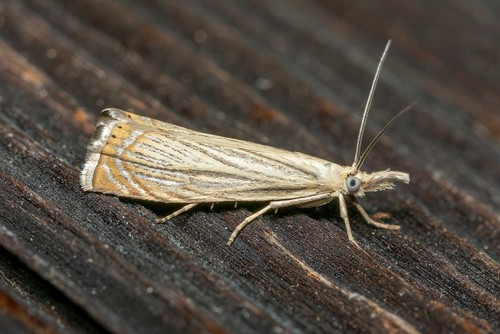
Chrysoteuchia culmella, commonly known as the garden grass-veneer, is a moth species that belongs to the Crambidae family. It was first formally described by Carl Linnaeus in 1758, in the 10th edition of his work Systema Naturae. This species is found in Europe. Its wingspan measures between 18 and 24 mm. The forewings are brown, with a whitish median streak that ends in branches running along veins 2 to 5, and these branches are often separated by dark fuscous scales. The dorsal two-thirds of the forewing is often fully suffused with whitish-ochreous, and a terminal series of black dots is present, with metallic-colored cilia. The hindwings are a rather dark shade of grey. Full grown larvae are pale pinkish-ochreous, with brown spots; their head and the second thoracic plate are brown and marked with darker coloring. Additional information on this species can be found in the work of Parsons et al. This moth flies from June to July, with flight timing varying depending on location. Larvae of this species feed on a variety of grasses.