About Chrysosplenium wrightii Franch. & Sav.
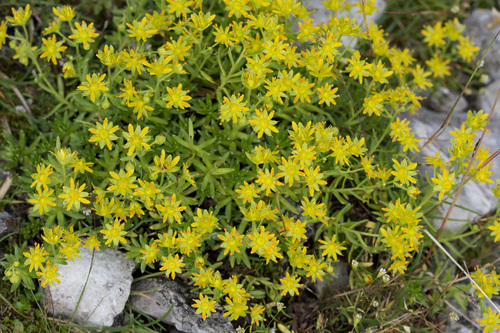
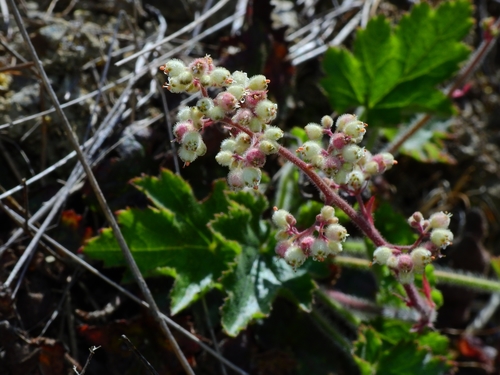
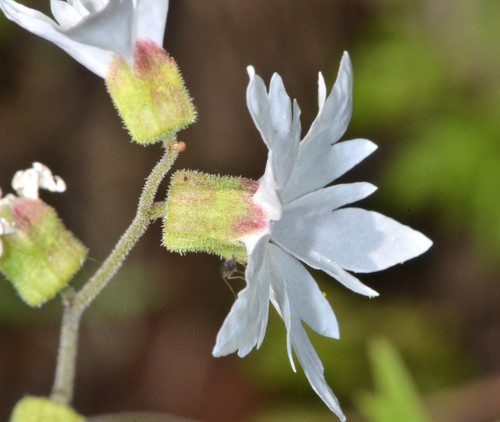
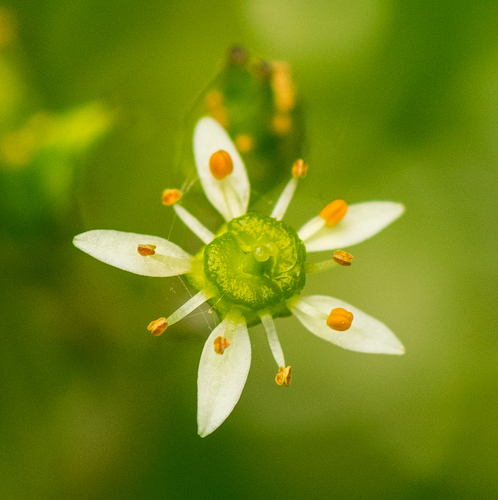
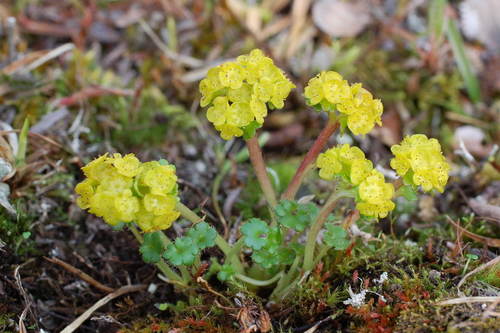
Chrysosplenium wrightii, commonly known as Wright's golden saxifrage, is a plant species native to northwestern North America and northeastern Asia. It grows on tundra and along stream banks at elevations up to 2300 meters, found in British Columbia, Yukon, Alaska, Russia's Kamchatka Peninsula, and eastern Siberia. This species was first formally described in 1878, with the original description citing it as originating from Japan. The description was based on collected material from along the Sea of Okhotsk, which was likely from either Sakhalin Island or one of the Kuril Islands. These areas were part of Japan at the time of collection, but are now part of the Russian Federation. Two infraspecific taxa have been proposed, and both names are accepted by The Plant List: Chrysosplenium wrightii var. beringanum (Rose) H.Hara, native to St. Paul Island in Alaska, and Chrysosplenium wrightii subsp. saxatile (Khokhr.) Vorosch., native to Russia. Chrysosplenium wrightii is an herb that reproduces via stolons that grow along the ground surface. Its flowering stalks can reach up to 16 cm in height, and each stalk bears a cyme that can hold up to 30 flowers. The flowers are yellow, purple, or orange, and are typically marked with purple spots.